The Colorado Coalfield War Archaeological Project
Digital Atlas
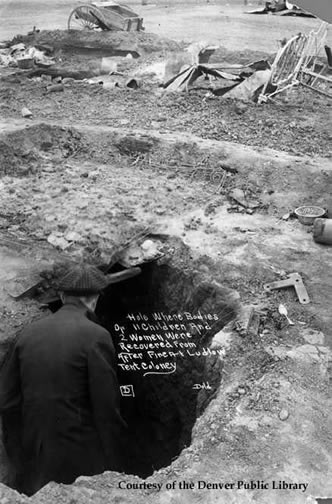
Death Pit Strikers built cellars to protect their families from the hostile environment of the strike. The cellars provided protection from the cold and the snow. It also protected strikers' families and their possessions. Strikers hid prohibited items, such as guns and ammunition, in cellars away from the eyes of National Guard troops. Families of strikers hid and slept in the cellars to avoid the occasional gunfire into the colony from mine guards. The coal companies also used searchlights to harass the strikers making cellars the only place a striker and his family could get a good night's sleep. Pregnant mothers gave birth in the cellars rather than on the surface in the tent. This sense of safety added to the tragedy of the Ludlow Massacre when 4 women and 11 children sought shelter from the National Guard's gunfire in a cellar. The fighting of the massacre led to the tent above the cellar to catch fire suffocating all but two of the women hiding in the cellar. The survivors of the massacre memorialized this cellar by calling it the "Death Pit"(below). The guard claimed not to have knowledge of tent cellars before the strike.
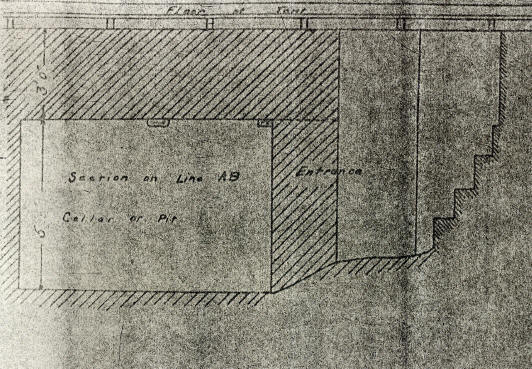
Strikers and the union did not document the size of tent cellars in the colony. Strikers probably built their own cellars using their own individual designs. This cross section suggests a deep cellar with a depth of 8 ft. and earthen stairs leading into the cellar. This depth corresponds to the strikers use of cellars for living quarters for women and children.
|