
Peacebuilding and Trauma Recovery:

Integrated Strategies in Post-War Reconstruction

University of Denver

February 22-24, 2007


Conference Agenda

This conference was professionally recording by National Conference Recording Services. CDs of the presentations may be purchased directly from their website: http://www.ncrsusa.com/cgi-bin/store/main-crip.html


Thursday

7:30 – 8:30                  Registration & coffee

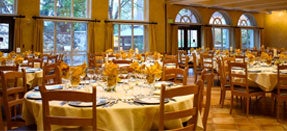
8:30 – 10:30                Opening plenary - Dining Room

Welcome and Introductions

DU Chancellor Robert Coombe
Conference Co-Sponsors

"A Dialogue Between Peacebuilding and Trauma Recovery"

Dean Adjukovic, University of Zagreb, Croatia

Past President of European Society of Traumatic Stress Studies

John Paul Lederach, University of Notre Dame, South Bend, Indiana

              author of Building Peace: Sustainable Reconciliation in Divided Societies and the Moral Imagination

10:30 – 11:00              Coffee break

11:00 – 12:30              Session A

Panel A.1: Bridging Peacebuilding/Conflict Resolution and Trauma Studies - Room 229

Chair:  Tamra Pearson d’Estrée, University of Denver

Riva Kantowitz, Sabanci University, Istanbul, Turkey.  Healing systems: A multi-level model of trauma in Guatemala.

Craig Zelizer, Georgetown University, Washington, DC.  The rush to reconcile:  Cautionary reflections for conflict resolution practitioners from the field of trauma studies.

Discussants:  Dean Adjukovic and John Paul Lederach.

12:45 – 1:45                Exhibitors and networking luncheon - Dining Room and exhibitors hallway

An opportunity to begin networking over lunch and to visit tables exhibiting programs of academic institutions and nongovernmental organizations.

2:00 – 3:30                  Session B

Panel B.1:  Trauma cycle/Intergenerational trauma transmission/political mobilization - Room 229

Chair: Tatsushi Arai, School for International Training, Vermont

Tatsushi Arai, School for International Training, Vermont.  Transforming cultural carriers of chosen trauma:  The case of the Yasukuni shrine in Tokyo.

Dana Eyre and Marsha Lake, Fairfax, Virginia.  Trauma recovery and politics: A reflection on the connection between trauma, grief, mourning, and post war political mobilization in Kosovo and Iraq.

Anne Marie Marsa, American University, Washington, DC.  Jewish-Israeli peacebuilders and the Holocaust:  Perceptions, national myths, meaning, and actions.

Panel B.2:  Developmental Issues in Trauma & Peacebuilding - Room 231

Chair:  Judith Fox, University of Denver, Colorado

Anne DePrince, University of Denver, Colorado.  Cognitive and emotional correlates of violence against women and children: implications for creating peace and healing.

Judith Fox, University of Denver, Colorado.  Attachment theory: Relational elements in the treatment of trauma.

Melodye Feldman, Seeking Common Ground, Denver, Colorado.  The Building Bridges for Peace Project: Practice and methodology.

3:45 – 5:15                  Session C

Panel C.1:  Remembering & Forgetting - Room 229

Chair: Susan Thomson, Dalhousie University, Halifax, Canada

Tazreena Sajjad, American University, Washington, DC.  Building Peace in a Culture of Impunity.

Margaret Eastman Smith, American University, Washington, DC.   Trauma and Forgetting.

Susan Thomson, Dalhousie University, Halifax, Canada.  The politics of trauma in post-genocide Rwanda: Treatment for some at the expense of the many.


Friday

8:45 – 10:15                Session D

Panel D.1:  Transitional Justice:  Politics and Pitfalls - Room 229

Chair: Adin Thayer, School for International Training, Vermont

Karen Brounéus, Uppsala University, Sweden.  Healing or Retraumatizing?  Women genocide survivors and the Gacaca Courts in Rwanda.

Catherine Byrne and Jenny Escobar, University of California, Santa Cruz.  “The bullets are still lodged in their bodies”:  South African survivors of human rights violations reflect on government reparations payouts.

Judy Barsalou, US Institute of Peace, Washington, DC.  Managing Memory:  Looking to Transitional Justice to Address Trauma.

Panel D.2:  Importance of Narratives - Room 231

Chair: Sami Adwan, Bethlehem University, Palestine

Sami Adwan, Bethlehem University, Palestine, and Dan Bar On, Ben Gurion University, Israel; Fulbright scholars-in-residence at Monmouth University (Spring 2007).  Learning each other’s historical narratives: Palestinian and Israeli teachers.

Zheng Wang, Seton Hall University, South Orange, New Jersey.  Chosen trauma, chosen glory:  History education and peacebuilding in East Asia.

Siobhan McEvoy-Levy, Butler University, Indianapolis, Indiana. 'Where do I begin when peace is not a real goal?' Exploring trauma and knowledge in conflict and post-conflict narratives.

Discussant:  Margaret Eastman Smith, American University, Washington, DC.

10:30 – 12:00              Session E

Panel E.1:  Transitional Justice: Healing and Transformation- Room 231

Chair: Margaret Eastman Smith, American University, Washington, DC

Vern Neufeld Redekop, Saint Paul University, Ottawa, Canada.  A Post-Genocidal Justice of Blessing as an Alternative to a Justice of Violence:  the Case of Rwanda.

Sami Adwan, Bethlehem University, Palestine, and Dan Bar On, Ben Gurion University, Israel; Fulbright scholars-in-residence at Monmouth University (Spring 2007).  The Israeli-Palestinian Truth, Justice and Reconciliation Initiative.

Leymah Gbowee, Eastern Mennonite University, Harrisonburg, Virginia, and West Africa Network for Peacebuilding (WANEP), Accra, Ghana. Gender Justice in Post-War Liberia.

Panel E.2:  Assessing Postwar Trauma Recovery for the Next Generation - Room 229

Chair: Christine Hibbard, Family Medical Associates, Boulder, Colorado

Christina Halstead and Kaitlyn Crooks, American University, Washington, DC.  Healing in a Time of War and Post War: The Extension of Effective Trauma Recovery Programs.

Janet Shriberg, University of Denver, Colorado.  International Humanitarian's Fourth Pillar of Response: Education and the Role of Teachers as Frontline Caregivers.

Nancy Good Sider, Eastern Mennonite University, Harrisonburg, Virginia.  Trauma healing and Appreciative Inquiry:  A transformative change approach to people and organizations.

Discussant: Elaine Hanson, SalusWorld, Boulder, Colorado.

12:15 – 2:15                Luncheon plenary

"Collective Trauma in Postconflict Regions: Democracy Cannot be Built with the Hands of Broken Souls”"

Yael Danieli, Group Project for Holocaust Survivors and their Children, New York; Founding Director, Past-President, Senior Representative to

the United Nations, International Society for Traumatic Stress Studies.
Author and editor of Sharing the Front Line and the Back Hills: International Protectors and Providers, Peacekeepers, Humanitarian Aid Workers and the Media in the Midst of Crisis; The Trauma of Terrorism: Sharing Knowledge and Shared Care; and On the Ground After September 11: Mental Health Responses and Practical Knowledge Gained.

2:30 – 4:45                  Session F

Panel F.1:  Transforming Societies - Room 229

Chair: Dan Wessner, Eastern Mennonite University, Harrisonburg, Virginia

Chakra Raj Ojha, University of New England, Armidale, New South Wales, Australia.  Civil Society and Peacebuilding in Nepal.

Dan Wessner, Eastern Mennonite University, Harrisonburg, Virginia.  Engaged People in Transitional, Transforming Societies and States.

Josefina Echavarria, Vienna, Austria.   Conflict transformation and conflict prevention in Colombia: Institutional Peace Plans in Antioquia.

Barry Hart, Eastern Mennonite University, Harrisonburg, Virginia.  The Tangibles and Intangibles of Post-War Reconstruction.

Discussant.  Judy Kuriansky, Columbia University, New York.

Panel F.2:  Spiritual Approaches for Trauma Healing and Peacebuilding - Room 231

Chair:  Larry Graham, Iliff School of Theology, Denver, Colorado

Robert Wertz, Institute of the Divine, San Diego, California.  The Merkaba Mandala Project:  Building a common structure with the Abrahamic Faiths.

Elissa Teeple, George Mason University, Arlington, Virginia.  Holistic post-conflict reconciliation processes:  Integrating Matthew Fox’s Four Paths of Creation Spirituality and Michelle LeBaron’s Inner Ways of Knowing.

Larry Graham, Iliff School of Theology, Denver, Colorado.  Religious Responses to the Trauma of War/Religious Caregiving and Postwar Recovery.

6:30       Cocktails

7:00       Evening Banquet Plenary

“The African-American Spirituals Tradition:  Trauma and Healing”

Arthur Jones, University of Denver, and the Sojourners Acapella Group of the DU Spirituals Project Choir

Spirituals uplift in times of crisis, heal, comfort, inspire and instill hopes and dreams, thereby transforming individuals, communities, and whole societies. The Spirituals Project is a broad-based initiative to explore the many, varied dimensions of African American spirituals as art form, tradition and tool; and to invite all people to experience the joy and power of this dynamic music and gift from African Americans to the world.
Learn more at http://www.spiritualsproject.org/


Saturday


9:00 – 10:30                Session G

Panel G.1:   Child Soldiers and other Reintegration Issues - Room 229

Chair: Tazreena Sajjad, American University, Washington, DC

Liliana Anaya, American University, Washington, DC .  Individual demobilization and reintegration process in Colombia:  A nation building policy from a national security perspective.

Tazreena Sajjad, American University, Washington, DC.   The day after: Realities of reintegration.

Megan Greeley, George Mason University, Arlington, Virginia.  Reintegration ingredients:  Rehabilitation, restorative justice, and reconciliation.

Panel G.2:  Integrating Trauma Studies and Peacebuilding in Educational Settings - Room 231

Chair:  Ronald Fisher, American University, Washington, DC

Ronald Fisher, American University, Washington, DC.  The APA/CPA Ethnopolitical Warfare Initiative and Curriculum.

Elaine Hanson, SalusWorld, Boulder, Colorado.  Surveying the landscape:  Integrating Conflict Resolution & Peacebuilding into Trauma Studies Programs.

Barry Hart, Eastern Mennonite University, Harrisonburg, Virginia. Surveying the landscape:  Integrating Trauma Studies into Conflict Resolution & Peacebuilding Programs.


10:45 – 12:15              Session H

Panel H.1:  A Public Education Approach: An Approach to Healing, Reconciliation and Peace Building and its Uses in Radio Dramas and Informational Radio Programs in Rwanda, Burundi and the Congo - Room 229

Chair: Laurie Pearlman, Holyoke, Massachusettes

Laurie Pearlman, Holyoke, Massachusettes.

Ervin Staub, University of Massachusetts, Amherst, Massachusettes.

Rezarta Bilali, University of Massachusettes, Amherst, Massachusettes.

12:30 – 2:45                Closing luncheon plenary  - Dining Room  

"The Next Chapter: Consequences of Social Trauma and Post-Trauma Reconstruction" (downlink)

Vamik Volkan, Professor Emeritus of Psychiatry, University of Virginia. Senior Erik Erikson Scholar, Erikson Institute of Education and    

Research of the Austen Riggs Center, Stockbridge, MA. Author of Bloodlines: From Ethnic Pride to Ethnic Terrorism, Blind Trust: Large Groups and Their Leaders in Times of Crises  and Terror, and Killing in the Name of Identity.


Planning committee: Judith Fox, University of Denver, Colorado; Barry Hart, Eastern Mennonite University, Harrisonburg, Virginia; Elaine Hanson, SalusWorld, Boulder, Colorado; and Tamra Pearson d’Estrée, University of Denver.

Direct Edit