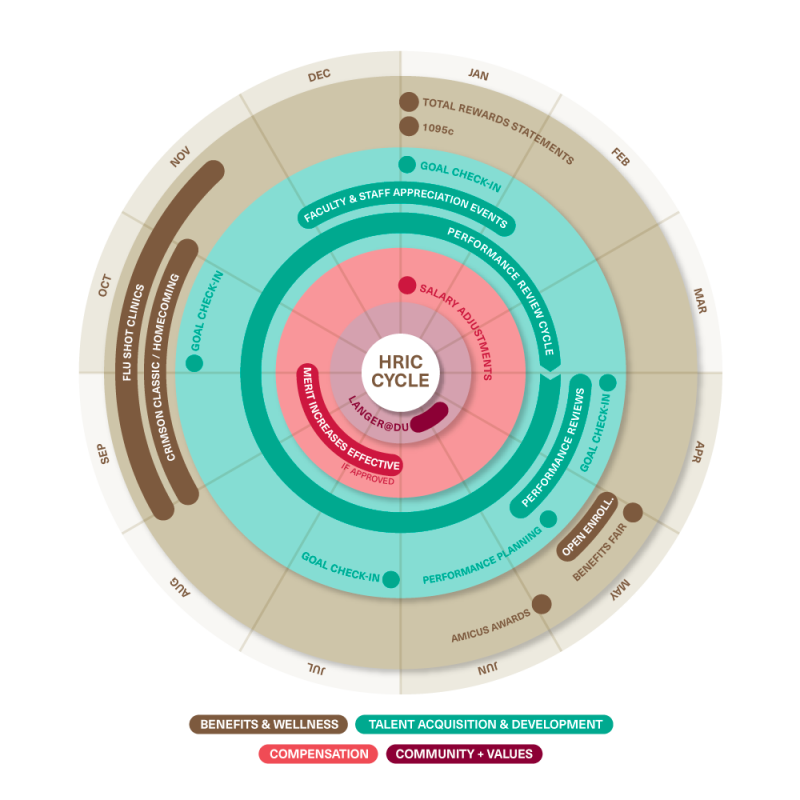







Every Fall, Human Resources collects annual reviews from supervisors of DU staff. This page contains information about the Fall Performance Review period.
NOTE: Starting Fall 2007, performance reviews will be conducted using the new online Performance Evaluation and Development System (PEDS).
Click here for more information about PEDS and training on the new system.
DU Organizational Effectiveness offers PEDS sessions which are recommended for managers and open to all employees. The sessions focus on aligning individual performance goals with unit, Division and University goals to create development plans that support performance goals and give feedback and guidance to improve performance.
For further information or assistance, please contact Amy King (x17511 or amking@du.edu) or Sharon Gabel (x13103 or sharon.gabel@du.edu).
The goal of the Performance Management Process at DU is to ensure that supervisors and employees understand and communicate openly about job performance, goals and timelines, and how to help employees develop the skills and abilities that they need to achieve performance goals and be successful at the University.
Performance reviews for appointed staff are conducted at least annually, most frequently in early fall. The reviews are based upon the goals and standards set out in the Performance Evaluation and Development System (PEDS). Faculty have a review process, but it is not currently conducted using the PEDS online system.
The supervisor and employee have equal responsibility to contribute to the performance review process. Both should understand the job responsibilities, job goals, and the related standards against which actual performance will be evaluated. The completion of the performance goal setting takes part in two stages:
- Stage One: Setting Goals and Standards for Performance and Development
At the beginning of the review cycle (often as part of the previous year's review) supervisors and employees define essential duties and responsibilities, performance goals (job goals) and development goals, and standards for measuring achievement of these goals.
The following sections of the PEDS online form should be completed in Stage One:
- Essential duties and responsibilities (and measurement standards for these)
- Job goals (and measurement standards for these)
- Development goals (and measurement standards for these)
This is done with the aid of the employee's position description, keeping in mind departmental goals for the upcoming year.
New employees and their managers should complete performance and development goals and standards within the first 60 days of employment.
NOTE: In the same way that setting performance goals is important, we encourage managers and employees to set development goals that are specific, performance-related, and aligned with departmental goals. DU Training and Development is available to consult with managers, individuals or unit groups to identify relevant and appropriate development opportunities within and beyond the University. Through performance consulting, we will also partner with you to identify performance support needed to ensure that individual and departmental goals are achieved.
- Stage Two: Reviewing Performance and Development Goal Accomplishments
At the end of the review cycle (often as part of the previous year's review) supervisors and employees review the performance and development goals, evaluating accomplishments based on the standards and timelines that were established at the beginning of the year.The review (Stage Two) should include completion of the following sections of the PEDS online form:
- Evaluation of actual performance (for essential duties, job goals and development goals)
- Measurement rating (the 2-letter rating described on the first page of the PRDS document)
- Overall measurement with narrative comments
NOTE: Without a completed review in PEDS, an employee will not be eligible for a merit increase.
The Performance Management Cycle
Performance evaluation should be an on-going process - not just an interview at the end of the year. Communication about performance and development goals and standards should take place throughout the year. The supervisor's role in coaching the employee to achieve successful performance is key.
The stages in the continuous performance management cycle are:
- Define essential duties
- Agree to performance standards and objectives AND Identify necessary development goals to achieve these performance goals
- Observe performance
- Coach for improvement
- Appraise performance
- Review essential duties (are they still the same?) and repeat the cycle
Aligning individual goals with the goals of the unit, division and University ensures that the contributions of individuals help to accomplish the goals of the group and of the institution.
Managing performance in this way also ensures that time is spent on what is most important, since the goals outlined in the PEDS online form should reflect departmental priorities. |