







4D in the Classroom: Engaging 4D in the First-Year Language Program
The Four-Dimensional (4D) Experience articulates DU’s vision of a transformative and holistic post-secondary education. The power of this vision and its ability to differentiate the student, faculty and staff experience on our campus comes not only from strategically designed 4D initiatives but also from the ways in which each of the four dimensions are woven into the fabric of who we are as an institution. Many 4D principles are so ingrained in our teaching and learning environments that they are hiding in plain sight! During the 2025 Fall Quarter, six faculty members across four language programs in the CAHSS Center for World Languages and Cultures formed a teaching circle to examine how daily instruction in DU’s First-Year Language courses is aligned with each of the four dimensions as a means of further identifying and elevating the ways in which these classes are fostering students' holistic growth in critical ways.
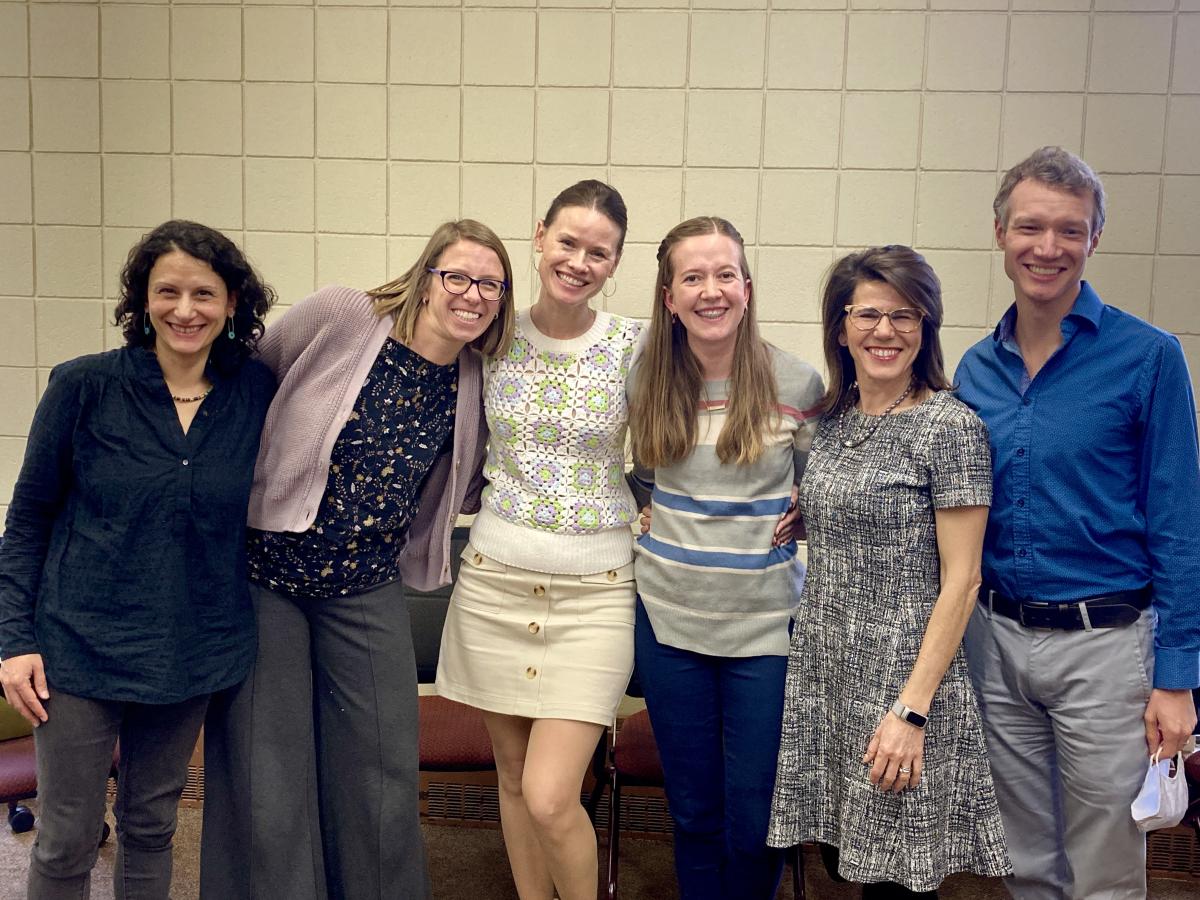
Andie Anderson, Kate Rice, Polina Maksimovich, Quint Kopper, Rocío Rubio Moiron, and Silvia Comuzzi-Sexton collaboratively developed a plan for peer observations using the 4D Experience Taxonomy as a framework to observe instruction and the classroom experience during a 50-minute first-year language class. During Week 8 of the Fall Quarter, each faculty member was observed by two peers, who looked for evidence of these 4D-aligned skills and habits during the class session. During Week 9, faculty members met with their peer observers who shared specific examples from the class session of the competencies listed in the 4D Taxonomy. The large group reconvened in Week 10 to summarize our findings and discuss our next steps.
Observing across languages allowed us to experience the class as a learner; classes in the First-Year Language Program are conducted primarily in the language of study, and so, like students, we were in a classroom where the language was new to us. Our observations, therefore, centered on the structure, actions, and behaviors that we could readily identify in the classroom. Without exception, each pair of observers easily identified classes as actively engaging the four dimensions across a variety of curricula and activities.
Students deepened intellect as they sought to communicate effectively during class activities in the target language, using creative and critical thinking, navigating ambiguity and working to problem solve in a new language. Class communities discovered character while encountering intercultural perspectives through the analysis of authentic resources in the target language. Students listened with empathy and understanding while classmates worked to respond using new concepts and vocabulary to communicate effectively. Students took risks with the target language and demonstrated resilience, as they used mistakes as an opportunity to understand and improve their proficiency. Students worked collaboratively with partners and small groups to complete communicative tasks. Students developed well-being while cultivating positive working relationships with a variety of classmates and building a growth mindset through in-class activities that challenged them to stretch their language abilities. Finally, classes honed practical, transferable skills that will allow students to design careers and lives of purpose: knowledge integration and application, reflective practices, openness to continuous learning, and setting and meeting daily objectives.
As a group, we found this to be an enriching and rewarding experience. Observing our peers invited us to reflect critically on our own practices and inspired and re-energized us. Our mutual commitment to the 4D Experience was apparent in the natural infusion of the 4D principles in our learning environments. We recognized that understanding and elevating 4D connections in our teaching reinvigorated our own sense of purpose and belonging to the CWLC and to the larger university community. Given that these language classes are part of the Common Curriculum at DU, we agreed that the strong alignment with 4D sends an impactful message to the many students we reach with our courses. However, we then posed a question that prompted us to develop the second phase of our research: are our students aware that the 4D Experience is this deeply embedded in their language courses? As we begin Winter Quarter 2026, we have planned several initiatives to measure student awareness and to help our students identify this connection more clearly. Increasing the visibility of the 4D Experience in our courses not only deepens our program’s commitment to a transformative educational experience for our students but also supports our work to highlight the importance of second-language learning as a vehicle to develop the skills necessary for a meaningful and successful future in any field.