






DU Professor Keith Gehring Set to Study Serbia's Political Future as a Fulbright Scholar
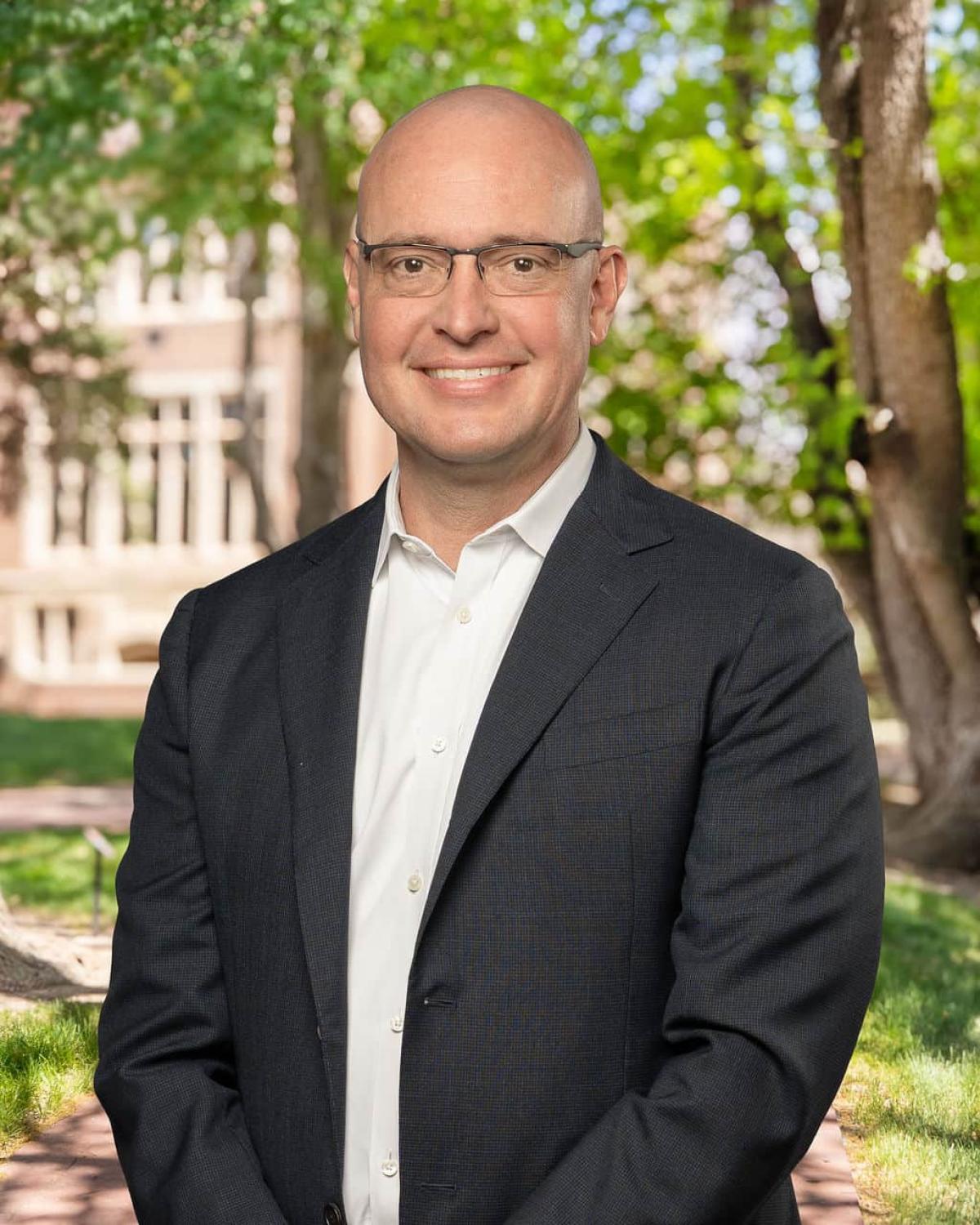
Keith Gehring’s path to a Fulbright Scholar Award began decades ago. As an undergraduate in the early 1990s, he was coming of age during a moment many believed would usher in a more peaceful, democratic world. The Berlin Wall had fallen. The Soviet Union had dissolved. But in the Western Balkans, those promises unraveled quickly. As war tore through the region—deepening Gehring’s curiosity about how nationalism and politics could fracture societies that had once lived side by side.
That curiosity never faded. More than 25 years after first traveling through Bosnia and Croatia—journeys that revealed the deep physical, psychological, and societal scars of war—Gehring is returning to the region with a new lens and new tools from his work at the University of Denver’s Frederick S. Pardee Institute for International Futures.
“I traveled through the region [back then], and that was a big mistake,” recalls Gehring. “I was naive. I knew nothing, but I wasn’t going to give up. And it took me a long time to make good on that.”
Gehring’s Fulbright at the University of Belgrade’s Faculty of Political Science will allow him to teach and work collaboratively with resident academics, students, and the wider community on Serbia’s contemporary political landscape, examining how a society shaped by conflict is grappling with governance and the possibilities for a different future.
“The world moved on, and I never did,” says Gehring, who will depart in March 2026 for a five-month residency in Serbia’s capital.
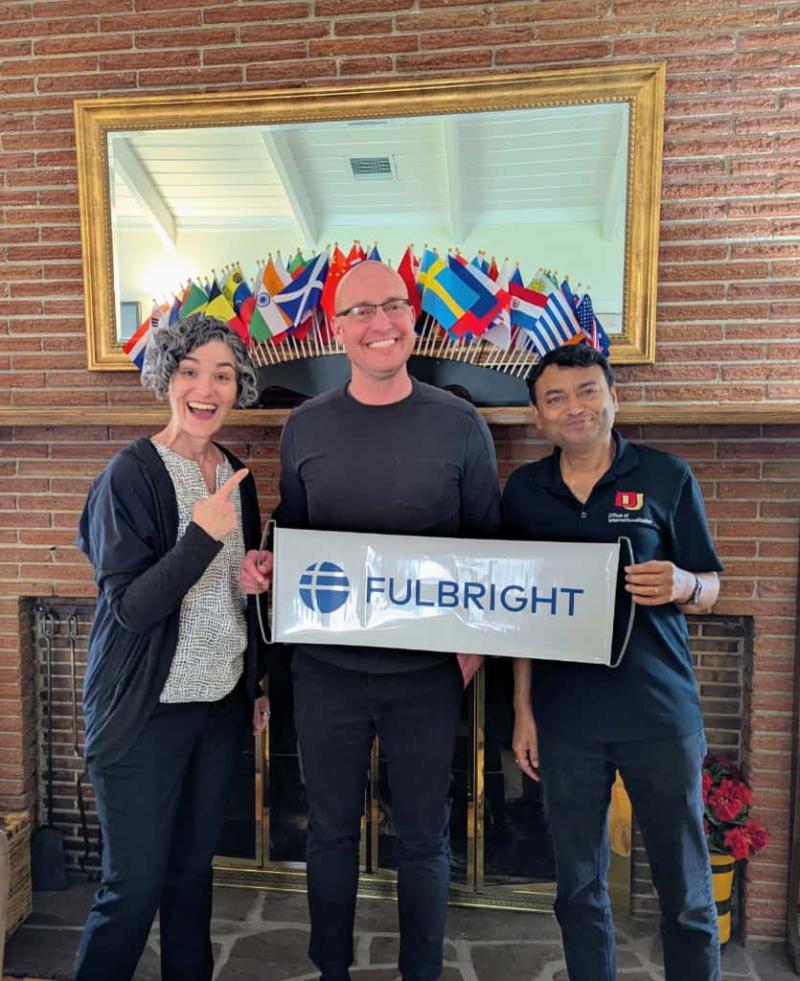
The DU Newsroom sat down with Gehring to learn more about his upcoming Fulbright project.
What does your project title, "Serbia at the Crossroads,” mean?
Serbians can write a future that is altogether different from the one that they've known for at least the last 10 years. It means that the future is yet to be written, and it's up to their young people to choose.
In 2024, there was a devastating tragedy at a railway station in Novi Sad, north of Belgrade. A concrete canopy collapsed, and 16 people died because of presumed shoddy construction supported by the government. A lot of other societies would shrug because it’s more of the same, but the Serbian students took to the streets, peacefully, and said, “We can be left, we can be right, but we demand, as young people, good governance.”
“Serbia at the Crossroads” was the name of my proposal for Fulbright at the time, and it was immediately timely for the folks in Belgrade.
How does your work at the Pardee Institute for International Futures relate to Serbia’s future?
The International Futures, or IFs, model forecasts human, social, and physical systems through the year 2100, helping users simulate policy scenarios and guide the decision making of students, faculty, and professionals. These forecasts provide meaningful scenarios for them to work toward—and everything that we build in the model and the corresponding curriculum will stay with the University of Belgrade. That way, they can teach the next generation about the outcomes that could happen because of their choices.
Fulbright awards are known for a long and uncertain waiting period. How did you feel when you received the news?
I was about to go out with my family and said, “Hold on, I just got an email from Fulbright—I need to click on this.” I opened it and said, “Your dad got a Fulbright.” I think they were very proud of their old man, and so was my wife. And I was proud of myself. What I'm doing has validity, and what I can offer is valuable to another part of the world.
As you prepare to spend time in Serbia, how are you thinking about engaging with the country’s culture?
It’s difficult not to appreciate the richness of Serbian culture, whether it’s the delicious cuisine, vibrant music, or proud traditions. My international experience began as a military dependent stationed in West Germany during the Cold War. Being the “new kid” and moving every few years wasn’t easy, but I adapted quickly and have now traveled to roughly 80 countries.
In Serbia, I understand the relationship with the United States is complicated, owing to a legacy of war and the current political environment. But as I tell my students—who are often concerned about Serbian perceptions of Americans—following simple rules will eliminate potential issues: be respectful, listen more than you speak, seek commonalities over differences, and always work toward shared understanding through grace and humility.
How will the Fulbright enhance your work at the University of Denver?
Every time I do a collaboration with another university in another part of the world, I bring their stories and their understanding of their politics back into the classroom. That's compelling for our students. When I speak about stories that have enriched my understanding, the theory comes alive for students, and they can apply it directly to what we're talking about in class.
Secondly, everything I do when I teach International Futures enriches our curricular and training offerings at the Pardee Institute. We were recently awarded a DU Forward grant to build an online program for the software and forecasting, and everything I do with the University of Belgrade will feed into that curricular development.
What does it mean to you to represent DU as a Fulbright Scholar?
I'm so proud that DU encourages me. I’ve come up with so many ideas, and rarely do they say, “Here’s why you can’t do this.” To represent a university that encourages me to do the hard things as a member of the Korbel faculty is truly inspiring, and I’m very appreciative.
The 2027-2028 application cycle for the U.S. Scholar Fulbright program opens in February 2026, with a deadline in September 2026. Contact Leasa Weimer, DU’s campus liaison for the U.S. Scholar Fulbright Program, to receive tips and resources about the application process or to meet for a personal consultation.


