






At the Forefront of AI: DU Researchers in Action
Meet five faculty members working at the cutting edge of AI—both studying the impact of the technology and using it to tackle real-world challenges across fields ranging from engineering and environmental science to education and social science.

Artificial intelligence is reshaping research across disciplines, and University of Denver faculty are helping to lead the way in using this powerful technology for the greater good.
This round-up highlights five DU professors whose projects showcase the many faces of AI in action—developing emotionally aware robots, studying the impact of AI on child development, predicting air pollution in real time, creating tools to nurture creativity in STEM classrooms, and analyzing social data to better understand and support youth experiencing homelessness—all with a shared commitment to thoughtful, responsible innovation that serves people first.
Anamika Barman-Adhikari, associate professor and associate dean for doctoral education in the Graduate School of Social Work

Barman-Adhikari brings together her backgrounds in research, policy, and clinical services to focus on one urgent goal: preventing HIV and substance use among vulnerable youth, especially those experiencing homelessness. Her work explores the social and emotional factors that shape risk and resilience for unhoused and marginalized young people—and now, she’s using AI to deepen that understanding. By analyzing hundreds of thousands of Facebook posts alongside survey data, she and her team are uncovering links between what young people share online and patterns of substance use. The research shows that many unhoused youth turn to digital spaces to seek connection, express hardship, and find support. Listen to a conversation with Barman-Adhikari on DU’s RadioEd podcast or read about her work in the University of Denver Magazine.
Mohammad Mahoor, professor in the Ritchie School of Engineering and Computer Science
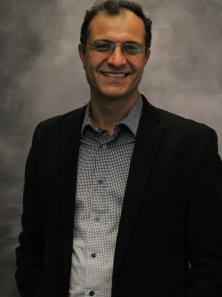
Mahoor, a computer science professor and director of the Artificial Intelligence and Social Robotics Lab (AISRL), is exploring how emotionally aware technology can make a real difference in people’s lives. Working at the intersection of AI, computer vision, and social robotics, he designs systems that can recognize human emotions and support meaningful social interaction. One of his flagship projects, Ryan—a humanoid companion robot built alongside DU engineering students—helps older adults facing early-stage dementia, isolation, and loneliness. Mahoor’s work has also expanded into developing social robots to support children with autism through a collaboration with Daniels College of Business students. You can hear more from Mahoor on the Entrepreneurship@DU podcast or read about his project with Daniels in the University of Denver Magazine.
Pilyoung Kim, professor in the Department of Psychology

A widely recognized expert in brain development and human-emotional bonding, Kim was ahead of the curve when she founded the Brain, Artificial Intelligence, and Child Center (BAIC) in 2019. Focusing on human-AI interactions, Kim and her team study the emotional and social dimensions of these relationships, including their effects on children. As AI companions become more common in education and therapeutic settings, researchers like Kim are both excited by the possibilities and deeply committed to ensuring these technologies are safe for young users. You can read more about Kim’s work and other DU research on Research Colorado.
Peter Organisciak, associate professor in the Morgridge College of Education

Organisciak, who is chair of Research Methods and Information Science, is using AI to help reimagine how creativity is taught and measured in K–12 classrooms. Backed by a major National Science Foundation grant, Organisciak and his collaborators are developing AI tools that both assess creative thinking and support students as they work through open-ended STEM challenges. Their project includes an AI scoring system that evaluates the originality of student ideas and an AI co-creation tool that offers real-time feedback during problem-solving. The work, which will be tested in middle school classrooms across the country and shared through an open-access platform, aims to make creative thinking more visible, measurable, and practical for everyday teaching. Read more about Organisciak’s work here.
Jing Li, associate professor in the Department of Geography and the Environment
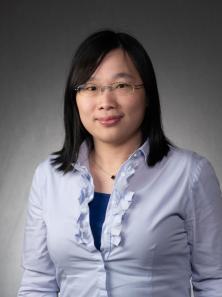
Li, who studies and teaches geographic information science, has developed machine-learning tools that make air-quality tracking more timely, precise, and useful for protecting public health. By combining low-cost sensors with advanced modeling techniques, she created a system that predicts neighborhood-level pollution across the Denver metro area in near real time—far beyond the limits of traditional, once-daily regional reporting. Her work helps forecast harmful PM2.5 levels so that people—especially those with respiratory conditions or long COVID—can take steps to reduce exposure; she has also used similar models to study the neighborhood spread of COVID-19. Read more about Li’s work in this DU Newsroom story.