



Weekly Letter from the Provost—Oct. 10
Dear faculty and staff,
This weekly newsletter will serve as one of many tools my office will use in the weeks and months ahead to keep you informed and engaged as, together, we pursue and achieve accomplishments toward our three goals for Academic Affairs. Thank you for your interest and support.
If you have suggestions for what we should include in future communications, please submit your ideas or story here. Suggestions received before noon on Monday will be reviewed and considered for publication in that week’s Friday newsletter. Others will be held for consideration until the following week.
Today’s update falls into four categories:
This weekly newsletter will serve as one of many tools my office will use in the weeks and months ahead to keep you informed and engaged as, together, we pursue and achieve accomplishments toward our three goals for Academic Affairs. Thank you for your interest and support.
If you have suggestions for what we should include in future communications, please submit your ideas or story here. Suggestions received before noon on Monday will be reviewed and considered for publication in that week’s Friday newsletter. Others will be held for consideration until the following week.
Today’s update falls into four categories:
- Campus news and happenings
- Goal 1: Shape enrollment and improve retention and graduation rates for all students
- Goal 2: Improve career outcomes and better prepare our students to succeed and lead in an AI-transformed workforce
- Goal 3: Strengthen academic excellence
Campus News and Happenings
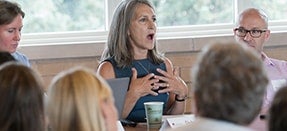
My Listening and Learning Tours continued this week with opportunities to visit with colleagues in the College of Arts, Humanities, and Social Sciences (CAHSS), the Faculty Senate, and Academic Affairs. Thank you to everyone who was able to attend. Among the many insights from this week’s listening and learning sessions, I was probably the most enthusiastic and encouraged in my conversations with CAHSS faculty and staff about their desire to engage in the undergraduate student recruiting process to increase yield – which ties directly into Goal #1: To shape enrollment and improve retention. It was a full day trying to keep up with Dean Sahara Byrne as we walked from meeting to meeting, but I can report that it got me 9,884 steps toward my daily goal of 10,000.
On Monday, I visited the Newman Center for the Performing Arts, and I want to thank Aisha Ahmad-Post, executive director, and her staff for the hospitality. I walked away from that meeting with a profound appreciation for the incredible facilities and the Newman Center’s ability to enrich not only our campus but the broader Denver area.
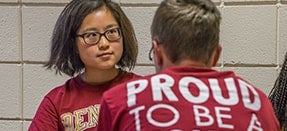
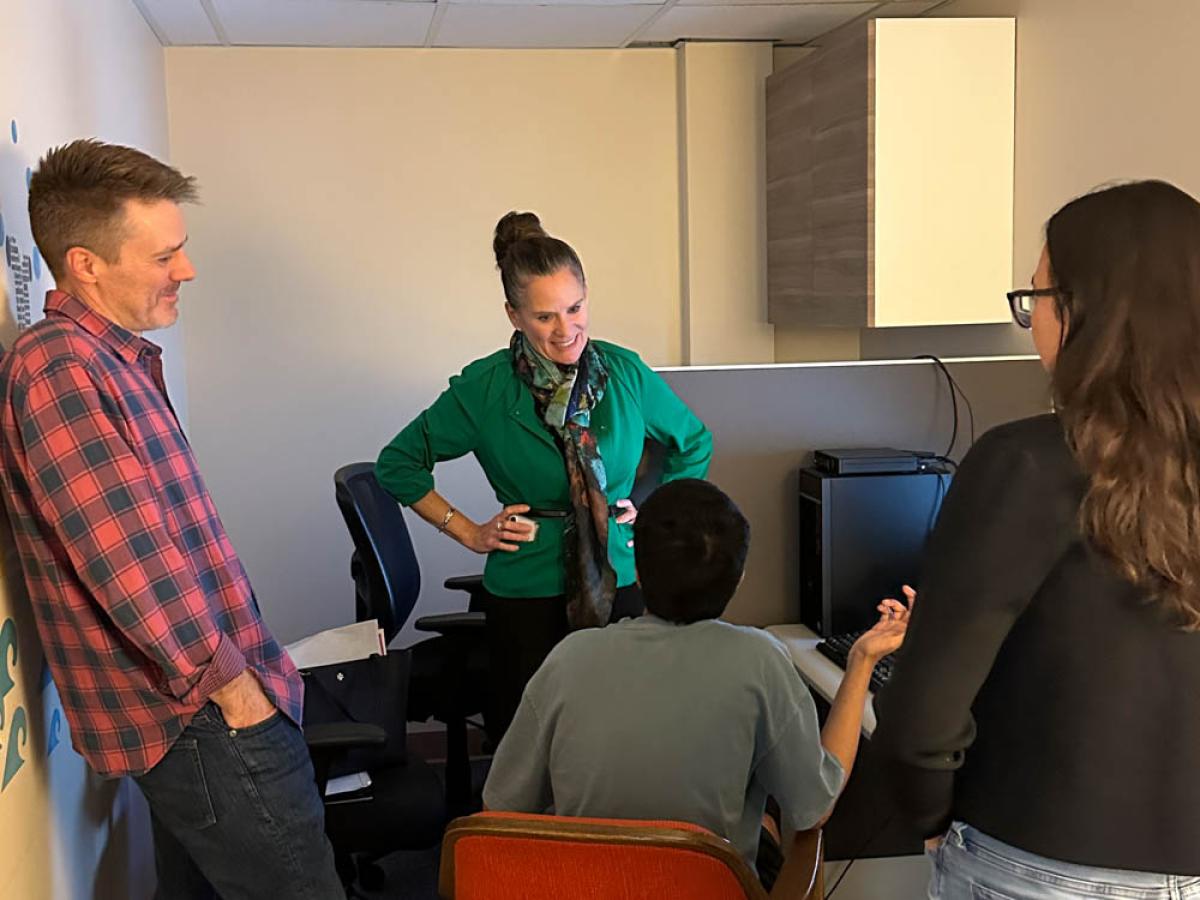
Chancellor Jeremy Haefner and I had multiple opportunities to engage with community members and organizations throughout the week as well. Starting on Monday and continuing throughout the week, we had the pleasure of conducting multiple drop-ins with faculty and students in first-year seminar (FSEM) courses. It was a great opportunity to get to know some of our newest community members. I want to thank the FSEM faculty and the faculty in the majors these students eventually choose for the indispensable support role you all play in advising our students into the colleges.
On Tuesday, we joined the Staff of Color Association (SOCA) to engage in dialogue and answer questions about new and longstanding efforts to support staff retention and belonging.
On Wednesday, we had a great visit at the Graduate Student Government reception.
Today, thanks to the invitation from Faculty Senate President Sarah Watamura, we, along with Vice Chancellor of Community Support and Engagement, Chris Whitt, and Senior Vice Chancellor for Legal Affairs and General Counsel, Elizabeth Bullock, answered questions about the new Division for Community Support and Engagement and our focus on our values of inclusion while also remaining in compliance with federal law. I was also grateful for a chance to preview upcoming conversations in subsequent Senate meetings pertaining to DU’s budgeting process and my plans and intentions for academic leadership to remain central and in control of academic budgeting, despite organizational changes over the past few years.
Chancellor Jeremy Haefner and I had multiple opportunities to engage with community members and organizations throughout the week as well. Starting on Monday and continuing throughout the week, we had the pleasure of conducting multiple drop-ins with faculty and students in first-year seminar (FSEM) courses. It was a great opportunity to get to know some of our newest community members. I want to thank the FSEM faculty and the faculty in the majors these students eventually choose for the indispensable support role you all play in advising our students into the colleges.
On Tuesday, we joined the Staff of Color Association (SOCA) to engage in dialogue and answer questions about new and longstanding efforts to support staff retention and belonging.
On Wednesday, we had a great visit at the Graduate Student Government reception.
Today, thanks to the invitation from Faculty Senate President Sarah Watamura, we, along with Vice Chancellor of Community Support and Engagement, Chris Whitt, and Senior Vice Chancellor for Legal Affairs and General Counsel, Elizabeth Bullock, answered questions about the new Division for Community Support and Engagement and our focus on our values of inclusion while also remaining in compliance with federal law. I was also grateful for a chance to preview upcoming conversations in subsequent Senate meetings pertaining to DU’s budgeting process and my plans and intentions for academic leadership to remain central and in control of academic budgeting, despite organizational changes over the past few years.
Reminder About Events and Protests at DU
I hope that you saw this week’s important message reminding community members about DU’s events and protests policies in support of our commitment to freedom of expression. These are challenging times, and I am grateful to each of you for your support and collegiality as we seek to sustain a safe and engaging environment for our community.
Academic Freedom at DU
Over the past month, we have received some questions about academic freedom at the University of Denver. These questions are understandable given the environment we find ourselves in, and I want to take a moment to address both my own stance on this topic as well as the University’s—which are aligned.
In June 2024, DU’s Faculty Senate released a statement on academic freedom and expression which expresses and confirms our faculty’s commitment to these values among others, both individually and collectively, and with due process protections. I am in complete agreement with these values and as noted in the statement, they are also in agreement with DU’s official guidelines as articulated in the appointment, promotion, and tenure and freedom of expression policies.
Despite a national climate where concerns about academic freedom persist, both Chancellor Haefner and I believe fundamentally in its importance to our community, and particularly to our scholarly pursuits, and will defend these values vigorously.
In June 2024, DU’s Faculty Senate released a statement on academic freedom and expression which expresses and confirms our faculty’s commitment to these values among others, both individually and collectively, and with due process protections. I am in complete agreement with these values and as noted in the statement, they are also in agreement with DU’s official guidelines as articulated in the appointment, promotion, and tenure and freedom of expression policies.
Despite a national climate where concerns about academic freedom persist, both Chancellor Haefner and I believe fundamentally in its importance to our community, and particularly to our scholarly pursuits, and will defend these values vigorously.
Fall 2025 Flu Shot Clinic
As we enter the colder months, I encourage all members of our campus community to take proactive steps to protect their health. DU is offering free flu shots to students, faculty, and staff at the following time:
- Tuesday, Oct. 14, 2-5 p.m.
- Community Commons 2600
- No registration required
Flu shots are available to all employees, regardless of insurance provider.
Goal 1: Shape Enrollment and Improve Retention and Graduation Rates
Free Application Days
The Colorado Department of Education recently announced the eighth Colorado Free Application Days, which occurred Oct. 7–9. During this time window, DU joined public colleges and universities in Colorado, as well as many private institutions, in waiving application fees. All Colorado residents applying to undergraduate programs at public institutions or participating private colleges were eligible to apply to institutions for free.
In 2024, nearly 66k applications were submitted during the free application period, saving students more than $2.8 million. Nearly 75% of Colorado’s jobs now require post-secondary credentials. Providing free applications to potential students helps them acquire noted credentials. Thank you to our admissions staff, as well as our colleagues in the Office of Information Technology, for making sure our systems were ready and able to accommodate the increase in applications experienced during this time of enhanced accessibility.
Federal Rulemaking: Definition of Professional Degree
As with nearly all institutions of higher learning, we have been closely following and monitoring this fall’s rulemaking session, particularly as it pertains to how the federal government opts to define “professional degrees,” as this has significant ramifications on federal loan limits for students who fall within or outside of the government’s definition of professional degrees.
Last week, this negotiated rulemaking was deemed essential and will continue during the shutdown. In session, several definitions were proposed—ranging from the narrow construct in the original legislative language to a broader approach inclusive of all degrees that culminate in licensure. A phased (staggered) implementation over multiple years was also discussed. The University of Denver is working with peer institutions, national organizations, and other stakeholders to advocate for an inclusive, historically grounded definition. The next negotiated rulemaking hearing on the definition of “professional student” is scheduled for November.
Undergraduate Retention Update
I'm pleased to share that the fall 2024 one-year week 3 retention rate for first-time, first-year (FTFY) students is 88.75%—very slightly above last year's rate, and a new ten-year high. Thank you for all of your collective work in supporting the student experiences that led to this outcome. Two- and three-year retention for FTFY students has also increased (two-year is at 84.76%, an increase of 3.74 percentage points; three-year is at 79.09%, an increase of 0.44 percentage points). We are continuing to monitor these data points to increase retention to the second, third, and fourth years as we work toward improvements in graduation rates.
Additionally, retention of undergraduate students who began as exploratory (undeclared) has traditionally been lower than the cohort average. Intentional supports for exploratory students have increased over the past several years, and this year, retention of students who began as exploratory has now surpassed the cohort average at 89.75%. Thank you especially to the Office of Academic Advising, Student Success Coaching, the Path Forward Program, FSEM faculty mentors, Career and Professional Development, and the 4D Experience team for their collaborative support of exploratory student success!
I encourage you to explore the Undergraduate Persistence Dashboards in Data Insights, which currently reflect week 3 census data. These dashboards allow users to explore multiple combinations of facets of student characteristics, and they can be accessed in Data Insights in the My4D portal. (My4D>Data Insights>Institutional Research dashboard, under the Graduation and Persistence tab). To access Data Insights, you will need to be logged into our Global Protect VPN.
Additionally, retention of undergraduate students who began as exploratory (undeclared) has traditionally been lower than the cohort average. Intentional supports for exploratory students have increased over the past several years, and this year, retention of students who began as exploratory has now surpassed the cohort average at 89.75%. Thank you especially to the Office of Academic Advising, Student Success Coaching, the Path Forward Program, FSEM faculty mentors, Career and Professional Development, and the 4D Experience team for their collaborative support of exploratory student success!
I encourage you to explore the Undergraduate Persistence Dashboards in Data Insights, which currently reflect week 3 census data. These dashboards allow users to explore multiple combinations of facets of student characteristics, and they can be accessed in Data Insights in the My4D portal. (My4D>Data Insights>Institutional Research dashboard, under the Graduation and Persistence tab). To access Data Insights, you will need to be logged into our Global Protect VPN.
Goal 2:) Improve Career Outcomes and Better Prepare Our Students to Succeed and Lead in an AI-transformed workforce
2024 – 2025 4D Experience Impact Report
DU’s 4D Experience is a promise that education should be more than the sum of its parts. We are all committed to empowering our students to shape their education in ways that make sense for them and align with their individual interests. The 4D Experience encourages them to integrate learning across their time and academic pursuits. It helps them make sense of who they are becoming at DU and prepares them to apply their learning to design careers and lives of purpose. And it gives them the building blocks to establish a foundation for lifelong learning, engagement, and thriving. This is the 4D Experience, and I want to thank you all for your commitment and support of this critical initiative.
The 4D Experience Team has just released its 2024 – 2025 Impact Report, and it should be available online soon. Kudos to Executive Director Laura Perille and her team, as well as the broad range of campus partners and champions who share in the progress and successes made this past year and reflected in the report.
The 4D Experience Team has just released its 2024 – 2025 Impact Report, and it should be available online soon. Kudos to Executive Director Laura Perille and her team, as well as the broad range of campus partners and champions who share in the progress and successes made this past year and reflected in the report.
Goal 3: Academic Excellence
Tiny Mammals, Big Discoveries: Academic Excellence at the Summit of Mount Blue Sky
At the University of Denver, academic excellence takes many forms—including fieldwork at 14,268 feet. Evolutionary biologist Jon Velotta and his team of student and postdoctoral researchers are conducting groundbreaking research atop Mount Blue Sky, one of Colorado’s highest peaks. Their subject? The deer mouse, a small mammal with extraordinary adaptations to life at high altitude.
While the summit’s thin air challenges even the most seasoned hikers, deer mice thrive in this environment. Unlike humans, who often suffer from altitude-related illnesses, these mice breathe more efficiently, maintain normal blood pressure, and avoid the complications of thickened blood. Velotta’s lab is working to understand how—and why.
This research builds on decades of scientific inquiry and exemplifies DU’s commitment to academic excellence through experiential learning; and, highlights the kind of curiosity-driven, high-impact research happening across DU—where students and faculty collaborate to answer complex questions in extraordinary places. Learn more about Jon Velotta’s research on high-altitude adaptation.
While the summit’s thin air challenges even the most seasoned hikers, deer mice thrive in this environment. Unlike humans, who often suffer from altitude-related illnesses, these mice breathe more efficiently, maintain normal blood pressure, and avoid the complications of thickened blood. Velotta’s lab is working to understand how—and why.
This research builds on decades of scientific inquiry and exemplifies DU’s commitment to academic excellence through experiential learning; and, highlights the kind of curiosity-driven, high-impact research happening across DU—where students and faculty collaborate to answer complex questions in extraordinary places. Learn more about Jon Velotta’s research on high-altitude adaptation.
Learning through Experience: Daniels Executive Masters in Business Administration (EMBA) Students Explore Global Business in East Africa
At the Daniels College of Business (DCB), EMBA students are gaining more than theoretical knowledge—they’re developing the mindset and skills needed to lead in a global economy. Through the Global Business I and II courses, students engage in immersive, hands-on learning that pushes them beyond their comfort zones and into the heart of emerging markets. As Amanda Cahal, director of EMBA global programs, notes: “Much of the world’s growth is in emerging markets and developing economies. We want to be where the world is headed, rather than where the world has been.”
In summer 2026, students traveled to Rwanda and Kenya, where they explored what it takes to launch a business in a developing economy. Before departure, they researched local markets and crafted business ideas. Once on the ground, they arranged their own meetings with companies, nonprofits, and government agencies to pitch these ideas and to inform feasibility studies.
Building on the success of this experience, the Daniels College is preparing for its next cohort of EMBA students to embark on a new global journey this fall, continuing the tradition of learning through experience in dynamic international markets in Ulaanbaatar, Mongolia and Seoul, South Korea.
What makes the Daniels global experience unique?
In summer 2026, students traveled to Rwanda and Kenya, where they explored what it takes to launch a business in a developing economy. Before departure, they researched local markets and crafted business ideas. Once on the ground, they arranged their own meetings with companies, nonprofits, and government agencies to pitch these ideas and to inform feasibility studies.
Building on the success of this experience, the Daniels College is preparing for its next cohort of EMBA students to embark on a new global journey this fall, continuing the tradition of learning through experience in dynamic international markets in Ulaanbaatar, Mongolia and Seoul, South Korea.
What makes the Daniels global experience unique?
- The Locations: Students select two countries from a list of 30, choosing destinations with contrasting cultures, economies, and political systems.
- The Daniels Network: The trip is powered by decades of alumni connections and international partnerships, opening doors to meaningful engagement.
- Team-Teaching: A trio of faculty co-leads the course, bringing diverse professional perspectives and co-creating the curriculum with students.
This experiential model fosters adaptability, curiosity, and global fluency—essential qualities for today’s business leaders. Learn more about the Daniels EMBA global experience.
Join Me for Lunch
On Monday, I greatly enjoyed the lunch and accompanying conversations with those faculty who were able to join me in the Faculty Lounge (Community Commons 2800) for the first of our standing, twice monthly “First and Third Mondays” lunch. Please join me in the Faculty Lounge from noon-1 p.m., on Oct. 20. Bring your lunch, your questions, and your ideas—I look forward to engaging with you.
Sincerely,
Elizabeth
Sincerely,
Elizabeth