







Carbon Neutral by 2030
Dear community members,
In 2021, at my installation ceremony, I pledged that the University of Denver would promote better environmental sustainability practices, especially through achieving carbon neutrality by 2030.
I am pleased to report that DU is on track to meet these goals, which reflects our dedication to conservation efforts and the environment. Our commitment was indeed daunting at first. Back in 2019, the University produced around 53,280 metric tons of carbon each year. These emissions, along with emissions released across the Rocky Mountain West, impact air quality in the city and region we love to call home. At the time, DU had pledged, along with many universities, to be carbon neutral by 2050. But it was clear to many of us that 2050 was not soon enough to play a meaningful part in the fight against climate change.
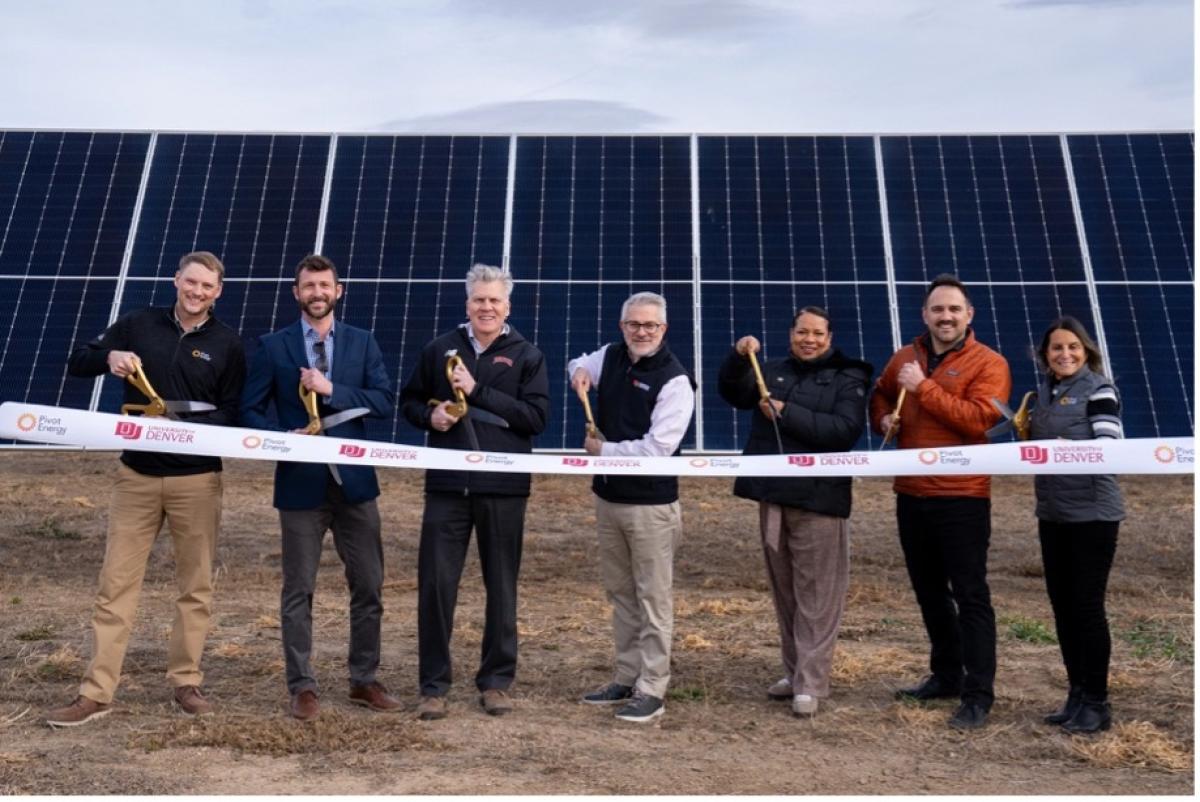
I am proud to say we have done our best DU—led in no small part by Lynn Bailey, director of energy and sustainability in Facilities. I am deeply grateful for Lynn’s work, which has kept us on track to meet our ambitious goals. You can watch a Denver 7 interview with Lynn that aired last week about our off-site solar arrays.
Here are some facts:
- By 2027, all our electrical consumption will be offset by renewable energy, and not simply because the local grid itself has become greener, but by our additional and intentional efforts.
- We boast 18 on-campus solar arrays, as well as six off-campus sites, with the first off-campus site going live in Johnstown, Colorado this year.
- The investment in solar arrays will save DU a projected $75K in 2030 and $4M over 27 years.
- DU’s other forms of carbon emissions are also down. Since our 2006 baseline, natural gas emissions are down 18.2%, with 2025 representing our lowest natural gas emissions in 22 years.
- Both natural gas and travel emissions are set to eventually be covered through carbon offsets.
Sincerely,
Jeremy Haefner
Chancellor