





DU Alumnus and Wireless Technology Pioneer H. Andre Thomas to Deliver Undergraduate Commencement Address
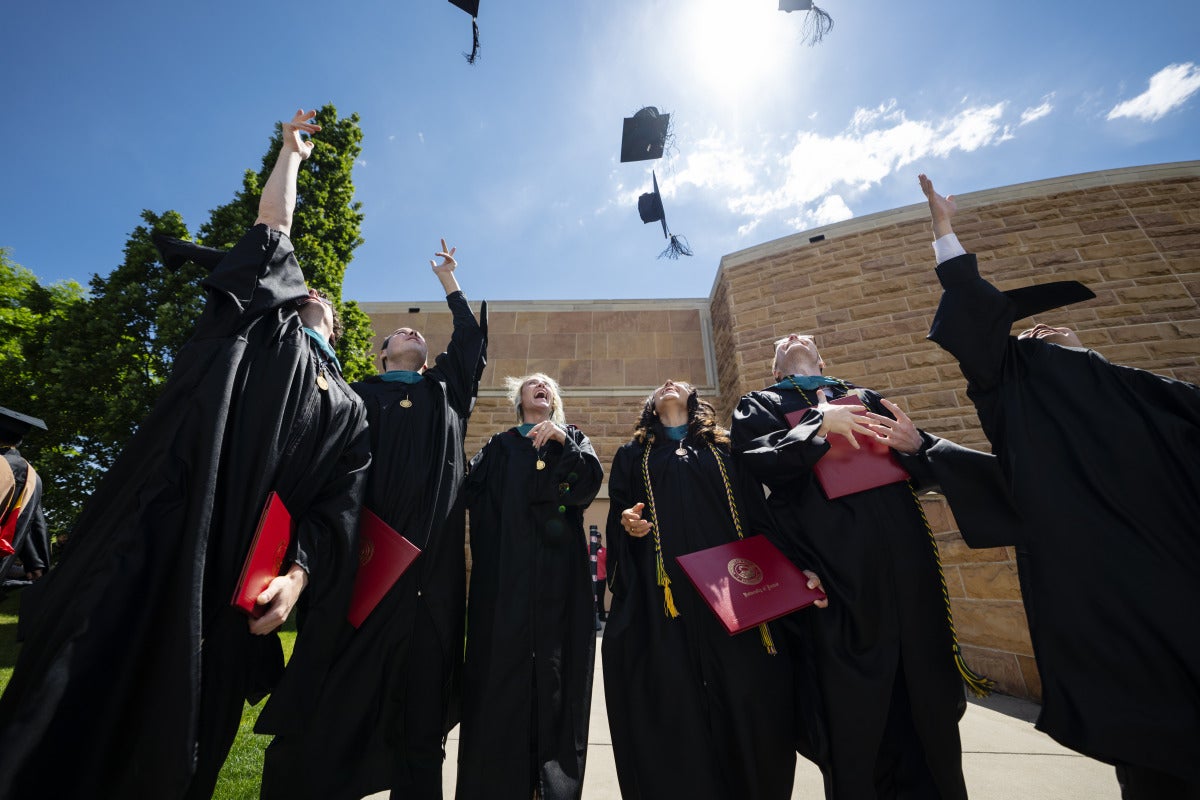
Thomas has built a remarkable career at the forefront of seismic changes—from the privatization of post-Soviet Eastern Europe to the birth of the smartphone. This June, he returns to campus to share what he's learned with the Class of 2026.
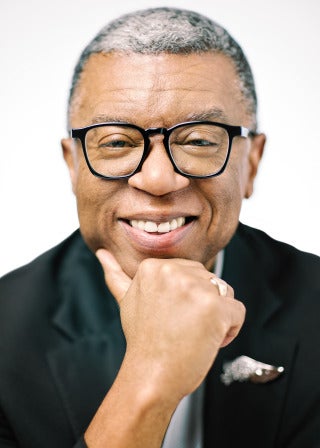
H. Andre Thomas has been part of some of the most consequential moments in modern business history. He helped launch the IPO that gave birth to what would become Verizon. He developed the strategic plan that drove the valuation behind a $200 billion hostile takeover, the largest in business history. He was the architect of the first global wireless data strategy, laying the groundwork for the smartphone era. And through it all, he has never forgotten where it started: at the University of Denver.
His journey to DU started in Denver’s Park Hill neighborhood, where he grew up during desegregation, an experience that shaped his worldview in ways he still draws on today. “I realized I was the same person in segregated Denver that I was in integrated Denver, and that my humanity and knowledge of my self-worth were most valuable,” he reflects. “For me, it’s always been about bringing my best to the table, allowing my gifts and talents to be utilized and seen.”
When it was time to go to college, Thomas also wanted “the best,” and that was DU. He earned a full academic scholarship from the Sachs Foundation in Colorado Springs and chose to pursue a bachelor’s degree in accounting.
The School of Accountancy, he says, was a close-knit community where professors did not just teach but also mentored and believed in their students. He remembers the impact of professors Joyce Frakes, who encouraged him to stay the course when he was uncertain about his major, and Patsy Lee, who helped him land his first job at the international accounting firm Coopers & Lybrand.
“During my senior year, I was uncertain where my career would lead,” Thomas says. “It was Professor Frakes who pulled me to the side and encouraged me not to make any rash decisions but to stick with the skills I had developed and to embrace my career opportunities. That was the best advice I ever got.”
Possibility meets opportunity
When Thomas started at Coopers & Lybrand, the oil and gas and mining sectors were the focus of the Denver office. One of his first tasks was documenting the operations process at a molybdenum mine in Climax, Colorado. Standing outside the mine on a cold fall morning, Thomas says he had a realization that changed the trajectory of his career.
“I remember how dynamic it felt, because my accounting degree took me to a place I never thought I’d be,” he says. “It opened my eyes to the diversity of industries that my skills could allow me to access.”
Shortly after this, he transferred to Coopers & Lybrand’s office in San Jose, California, where he began to develop his expertise in high tech IPO valuations in Silicon Valley, sparking a deeper interest in financial forecasting—a skill he would go on to refine during his graduate studies.
Harvard Business School recruited Thomas for its MBA program, based not only on his professional experience but on the strength of his DU education, he says. When he arrived in Cambridge, he became the informal accounting tutor for his entire class.
“It became known fairly quickly that I had the skills,” Thomas says with a laugh. “My accounting degree from DU is the foundation of what sets me apart to this day. It is my trademark.”
When he returned to Coopers & Lybrand after graduating from Harvard, he took on a new challenge, joining a highly specialized team focused on Eastern European privatization following the fall of the Soviet Union. A few months later, he led the team to Warsaw, Poland, to complete an acquisition valuation of the first privatized company in the region, which would serve as a model for every transitioning company thereafter.
His desire to use his education and experience then led him to PacTel Corporation in the early 1990s, where he helped build AirTouch Communications from the ground up, at a time when only 2% of Americans owned a cellphone. His IPO valuation work helped raise over $1.4 billion for the company to build a U.S. and global wireless network that would eventually become Verizon and Vodafone. Later, as chief strategy officer at Vodafone in London, he wrote the world’s first public wireless data strategy that drove the $200 billion hostile takeover of German conglomerate Mannesmann—the largest successful hostile takeover in business history—which helped lay the foundation for the smartphone era. In 2002, he became the founder and CEO of Wireless Ingenuity LLC, based in Bellevue, Washington, which has since been a source of innovation to wireless carriers including Vodafone and its partners around the globe. To date, Wireless Ingenuity has brought more than 100 wireless technologies to customers in North America, Europe, Asia, and Africa.
In 2021, Thomas joined DU’s Board of Trustees, a role he embraced wholeheartedly. Among his proudest contributions was helping to champion the Kennedy Mountain Campus as an essential complement to classroom learning at DU. “It was all about the students receiving a perspective of life that goes beyond the classroom,” he says. “I fully threw myself behind it, and I was so happy to see it come to fruition.”
Now, as he prepares to address the Class of 2026, Thomas is thinking carefully about the world graduates are stepping into, and he is optimistic. His message, shaped by a career spent navigating historic change, comes down to two words: hope and resilience.
“I want to show the graduates what’s possible when you face a future of uncertainty—how, with a strong foundation, a dream, and the resilience to navigate the unknown, you might help change the world.”