






Faces of 4D: Olivia Marker Turns Compassion Into Courage
The first-year graduate student in DU’s forensic psychology program is preparing to support and advocate for people navigating trauma, crisis, and the complexities of the justice system.

Faces of 4D is a series from Student Affairs that explores the diverse and complex ways in which the DU community lives the 4D Experience on campus, in their careers, and around the globe.
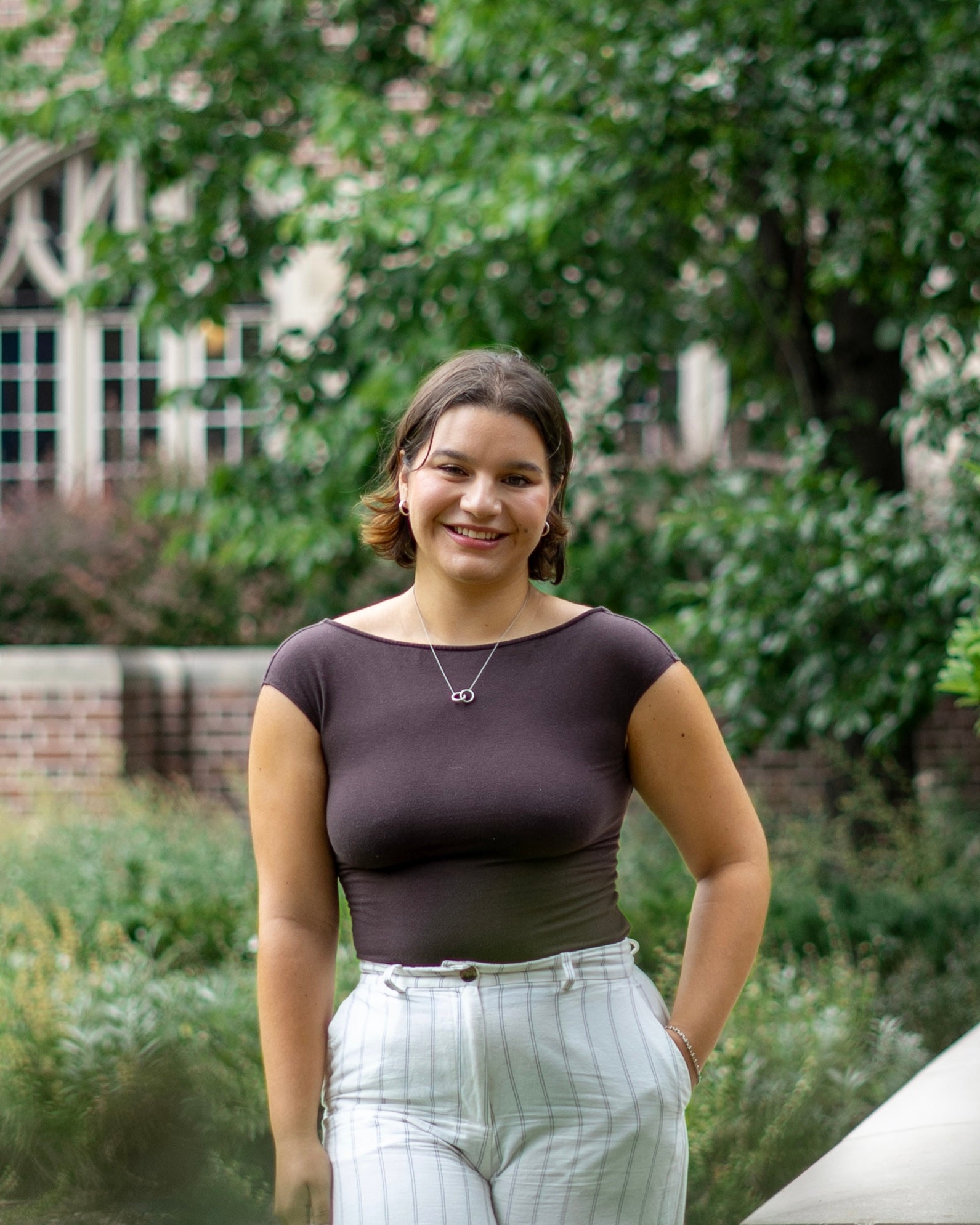
For DU graduate student Olivia Marker, compassion is not just a soft skill—it’s a kind of courage. In her first year in DU’s forensic psychology master’s program, Olivia has shaped both her academic path and her personal life around facing hard truths with empathy, steadiness, and an open mind.
Originally from West Virginia, Olivia earned her undergraduate degree in North Carolina, majoring in psychology with minors in forensics and criminology. Her interest in human behavior started early in life, but her family history also played a big role in bringing her here. “On my dad’s side, they were Holocaust survivors,” she says. “They were always very hardworking, and that influenced me to pursue higher education and stay involved with social justice.” The legacy of survival, migration, and rebuilding still guides how she thinks about her work, she says.
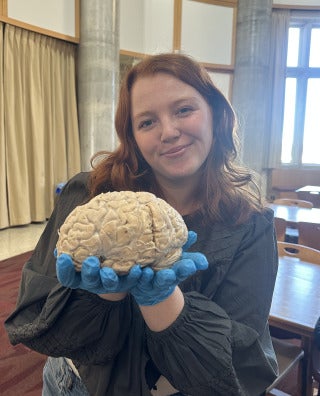
At DU, Olivia is involved in both academic and co-curricular spaces. She works as a peer educator with Krystoff Kissoon, 4D assistant director of Co-Curricular Innovation, supporting students as they navigate uncertainty, stress, and the everyday challenges of graduate life. She also volunteers in the Traumatic Brain Injury and Criminal Justice Lab in the Graduate School of Professional Psychology, where she has moved from shadowing to contributing to active research projects. In addition, she conducts an independent study with fellow students on the reliability of eyewitness testimony, leaning into the complexity that first drew her to the field.
Her courage shows up most clearly in spaces where many people might hesitate. Olivia interns at a family justice center, supporting survivors of domestic violence and sexual assault. The work demands emotional presence, cultural humility, and deep compassion. “I hear some pretty difficult stories every single day,” she says. “Sometimes it can make you see more bad in the world than good.”
Still, she chooses to stay, to listen, and to care.
Her graduate program requires students to attend therapy themselves, something Olivia sees as essential. “It’s important to have someone you can talk to about the conflicts that come up in your head,” she explains. “You have to give yourself time to reflect and relax, to spend time when you’re not thinking about the field at all.” For her, well-being is part of being an ethical professional.
Outside the classroom, Olivia finds joy in movement and community. She grew up playing competitive volleyball and still joins pickup games around Denver whenever she can. She loves movie marathons (even if it’s the same movie repeatedly), traveling, and exploring the city’s markets and fairs. These small, joyful rituals help her stay grounded amid the intensity of her work.
Academically, Olivia is drawn to the intersections of psychology, justice, and culture. A class on multicultural issues has been especially meaningful. "It's shown me how important it is to carry cultural humility with you,” she says. “It’s not just about psychology; it’s about being a decent human being.”
Looking ahead, Olivia plans to pursue a PsyD in clinical psychology at DU so she can conduct mental health assessments and serve as an expert witness in court. Her dream is to work in a jail-based setting or outpatient forensic clinic, advocating for people who rarely get that kind of support. “If I can be a compassionate person for someone, even for one hour a week, that matters,” she says. “A lot of people in the incarcerated population have never had someone on their side.”
Olivia says that, in everything she does, she hopes to bring into the world “as much compassion and understanding as I can.”
Her advice to future DU students is simple but powerful: work hard, honor your values, and stay committed to what matters most. “At the end of the day, when you look back and know you worked really hard for something, that’s the best feeling,” she says.