


First-Year Seminars: Thriving From Day One at DU
Author(s)
Anna Filippova
Student Writer
These five FSEMs helped first-year students build skills, confidence, and connections that set them up for success inside and outside the classroom.

Starting college isn’t just about finding your classrooms or keeping up with assignments—it’s about learning how to thrive. At DU, that means being engaged academically, connected socially, and supported emotionally, while discovering what excites and motivates you as a student. That can feel like a lot in your first quarter, but you don’t have to figure it out alone.

First-Year Seminars, or FSEMs, are designed to help. Required for all incoming students, these small, discussion-based classes double as orientation groups and introductions to university life. Covering a wide range of topics, FSEMs help students form connections, explore new ideas, and discover how they learn and grow—both in and out of the classroom.
Below are a few FSEMs from last fall that aimed to help students navigate the uncertainty they may feel in their first year while finding their footing at DU. From sharpening critical thinking skills to building stronger relationships, these courses encouraged students to focus on what means the most to them—making the first year not just manageable, but meaningful.
Exploring Higher Education Environments
In this FSEM, students dug into big questions about college life—like what a degree really means today and how the “traditional college experience” is changing. Taught by Michele Tyson, a clinical associate professor in the Morgridge College of Education, the course helped students connect those ideas directly to life at DU, using theory to better understand their own campus experience.
“This class prepares students to really think about why they chose to go to college and deeply consider what the value of education is,” Tyson says. “I also hope they start to see that the economic, political, and social environments in which we all exist influence who has access to what kind of education.”
Students say this is exactly what they took away from the class. Sarah Park, a physiology in health and disease major, says, “This course gave me a new perspective about the college experience that I wouldn't have been able to learn anywhere else.”
Business analytics major August Baker agrees: “This FSEM helped me better understand what goes on in a college or university environment and how to get through it.”
Design Your DU
Want help figuring out how DU actually works—and how to make it work for you?
Heather Martin, teaching professor in the University Writing Program, designed this course to ensure students have a smooth transition from their pre-college life to life at DU. "Students learn to identify what they want and find the support [services] they need at DU and engage them, all while building a connected community,” she says.
These skills have a lasting impact, and Martin enjoyed the close mentorship that came from working with students as they develop them. “This kind of work builds habits of intentionality and purpose that transfer well beyond the first year into majors, careers, relationships, and the countless transitions students will navigate in their lives,” she says.
The Psychology of Thriving
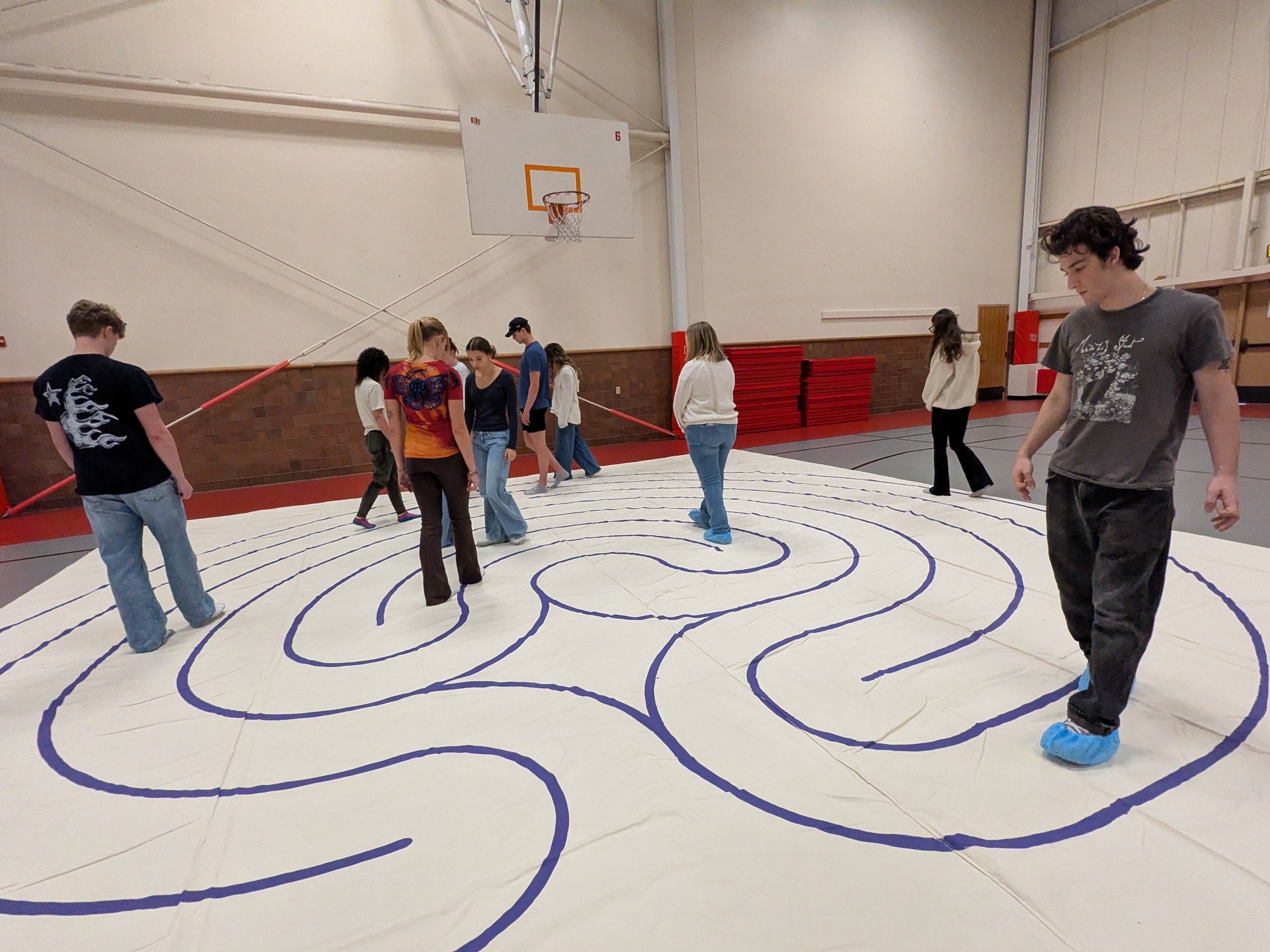
In this FSEM, Daniel McIntosh, a psychology professor in the College of Arts, Humanities, and Social Sciences, showed students how to build habits that boost their well-being and help them flourish in college.
From managing stress to navigating new social and academic environments, McIntosh says students “learned a menu of practices that can immediately help in the transition to college and be available for the opportunities and challenges in the coming years.”
The course also overlapped with McIntosh’s research interests of religion, emotions, and coping. He says, “I love the opportunity to both teach students about the scholarship on these topics and help them learn by doing, with a focus on approaches and practices directly relevant to thriving.”
Julia Saxman, who’s majoring in psychology and kinesiology with an emphasis on sports studies, found this interactive approach very enjoyable. “This FSEM was engaging and applicable,” she says. “Discussing thriving and methods toward achieving this state has allowed me to reflect on my own personal experience as a first-year college student.”
Thinking 101
An everyday part of life, thinking is also a skill you can practice and sharpen. In this FSEM, taught by Bud Bilanich, associate professor in the Daniels College of Business, students learned how to analyze evidence, construct arguments effectively, and build their media literacy.
“I created the course to help students develop their ability to think logically, evaluate arguments, and make reasoned decisions,” Bilanich says. “My hope is that students left the FSEM feeling more able to recognize their biases and the biases of others, and identify logical fallacies in arguments to which they are exposed.”
That approach resonated with Alicia Adamatova, a molecular biology and chemistry major. “This FSEM helped me to better understand the world around me and has enhanced my critical thinking abilities,” she says.
Communicating to Connect: The Art and Science of Communication in Personal Relationships
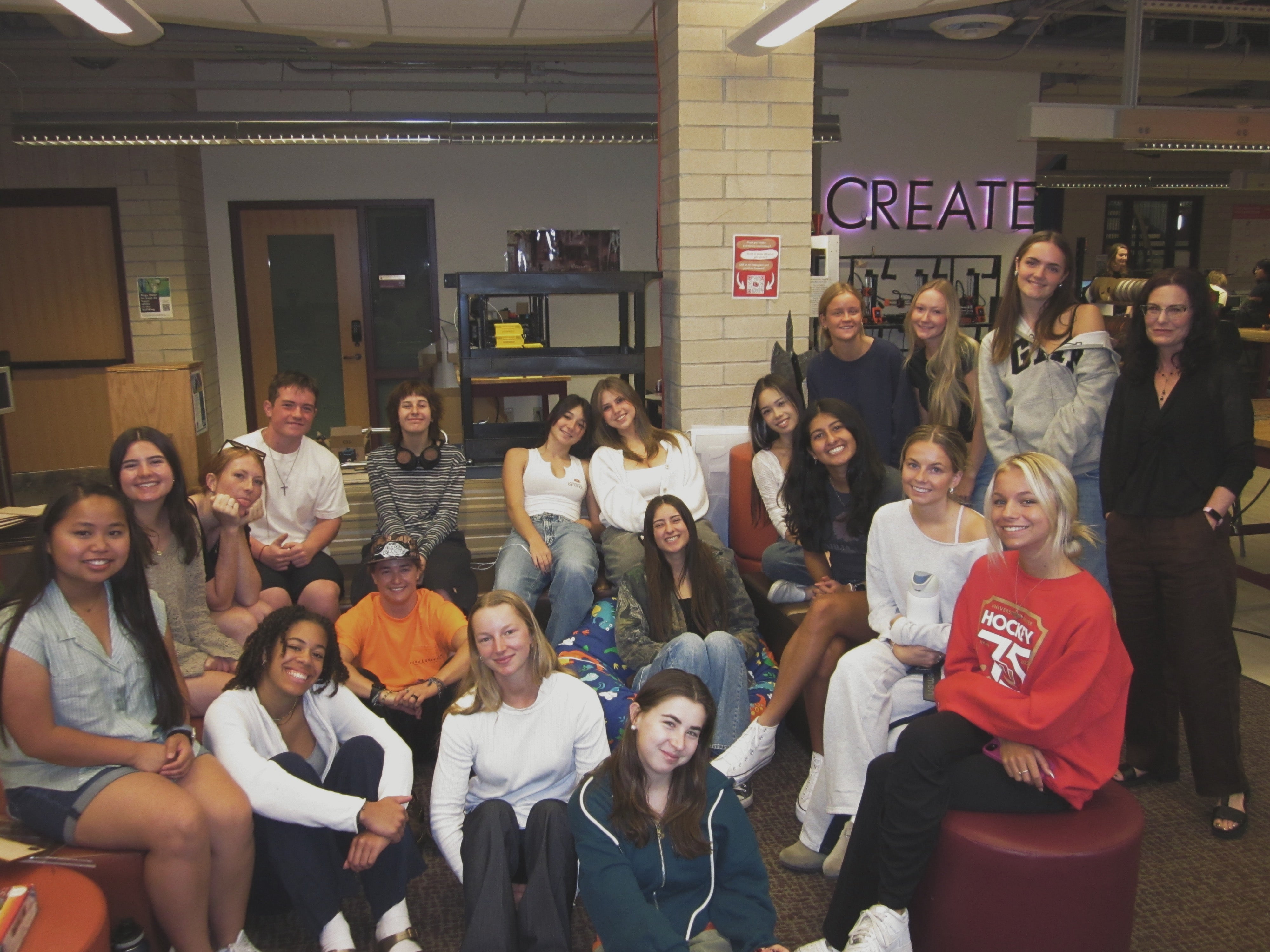
Elizabeth Suter, professor and director of undergraduate studies within Communication Studies, put together this brand-new FSEM course with one goal in mind: ensure that students are able to build and maintain healthy relationships.
“This course aims to educate students about the academic study of communication and relationships, challenge students to integrate curriculum to strengthen their own relationships, and foster a culture of connection in their social networks,” she says.
Students say they learned just that, strengthening connections both in and outside of class. “I cannot say enough about the connections I made in this FSEM,” says history major Allegra Lipman. “We really embraced each other on our learning journey.”
Her classmate Leo Murrell agrees, saying, “I met some of my closest friends through this class, and I don't think it would have been as transformative if we hadn't created an environment with such an emphasis on vulnerability.”
International relations major Kaliel Soya sums up the course’s impact perfectly: “I was really able to understand the relationships I have with strangers, family, and close friends a lot more.”