


‘It Just Took One Song’
Through performances, classroom visits, and hands-on experiences with world-class artists, the Newman Center’s educational programs connect K-12 students with new cultures, musical traditions, and creative possibilities.
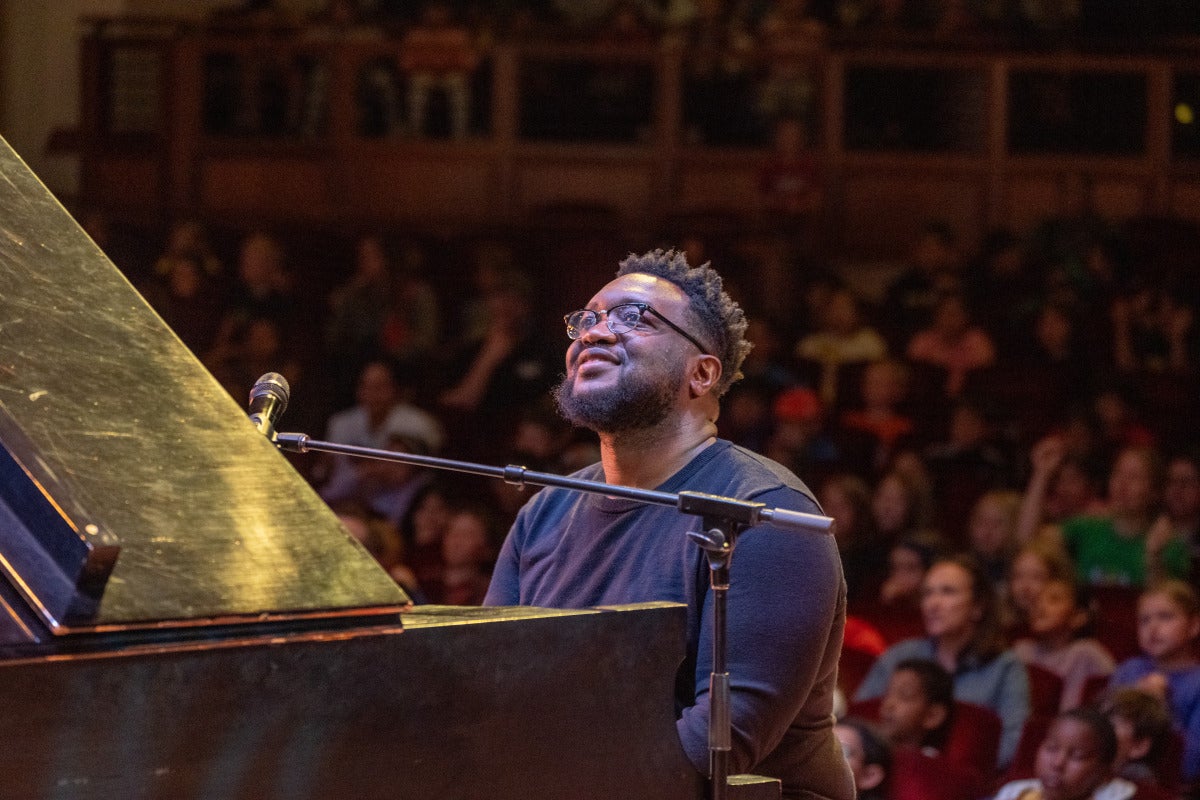
Musical Explorers is one way students learn about world-class artists like jazz pianist Demetrius Doctor.
When Luke Wachter talks about the impact of the educational programs he leads at the Newman Center for the Performing Arts, he likes to tell the story of an elementary student from Jordan whose family had recently moved to Denver.
“She was having a hard time adjusting. Her whole first semester here, she barely spoke,” he says.
But then, her class started Musical Explorers, a collaboration between Denver Public Schools, the Newman Center, and Carnegie Hall, in which students learn about three different global artists for several weeks, then come to the DU campus for a concert by those same artists. That year, one of the artists happened to be Jordanian singer Farah Siraj.
“The second she heard a song by Farah, her eyes lit up,” says Wachter, the Newman Center’s associate director of educational initiatives. “She even started helping teach the songs to the other students. Her teacher said it was like she became a different person, not just in music class but in school, in general. It just took one song.”
Musical Explorers is one of several programs the Newman Center offers to bring the arts to K-12 students in the Denver area. In the 2025-2026 season alone, approximately 10,400 students, educators, and community members participated in student matinees, master classes, artist residencies, Musical Explorers, summer camps, and professional development programs. Thanks to the generous support of donors to the Newman Center Education Fund, most of these programs are provided free of charge.
“It’s all about exposing the community to these incredible artists and finding ways for students not only to see their own cultures and communities reflected and respected on our stage but also to have a window opened to a whole new world of things they've never seen or heard before,” Wachter says. “And that's something that the Newman Center can provide that you can’t find anywhere else.”
Something for every learner
The Newman Center's educational programs create opportunities for students of all ages—from second graders discovering world music to teens producing original tracks—to connect with artists, cultures, and their own creativity. Here’s a look at their wide range of offerings.
Musical Explorers
The Newman Center’s largest program, Musical Explorers is a partnership with Carnegie Hall’s Weill Music Institute that introduces second-grade students to diverse musical cultures through a free, in-class curriculum. The program culminates in an interactive performance at Gates Concert Hall, where more than 2,500 students gather to see the artists they’ve studied. The Newman Center currently partners with 42 Denver Public Schools and plans to expand to schools in Boulder and Aurora.
“Students learn about these artists as people and about their backgrounds and their cultures,” Wachter says. “When they come see the live show, it’s really magical. It’s like a rock concert for second graders—they know these people, they know all the songs, they’re screaming their names.”
Student Matinee Series
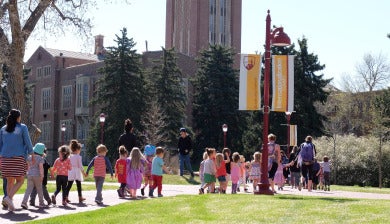
Three to five times a year, students of all ages come to campus to experience performances by artists from the Newman Center Presents series. The performances are free for schools, and the Newman Center provides transportation. For many students, it’s their first time seeing a live performance.
“We choose artists that we think will resonate with students,” Wachter says. “Then they get to experience a world-class performance in the Gates Concert Hall, which is one of the best venues in Colorado. It’s pretty special.”
Master Classes and Residencies
The Newman Center’s master classes and residencies bring artists directly into schools and community spaces. Depending on the artist, the experience might include a performance, interactive workshop, or classroom session.
Wachter points to a visit from Grammy Award-winning jazz pianist Arturo O’Farrill, who worked with the jazz band at East High School. These experiences, he says, allow students to engage with artists in a more personal way while also breaking down barriers to access.
Music Creators Camp
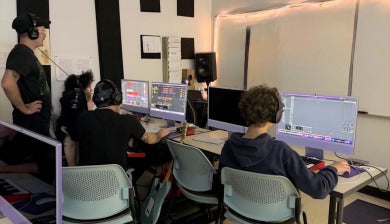
One of the Newman Center’s newest programs, Music Creators Camp gives young artists ages 13-16 hands-on experience using advanced technology to write, produce, and master original tracks. The camp is led by mentors from Denver Public Schools, Community College of Denver, and DU's Lamont School of Music.
“This camp came out of a real need I saw in the community,” says Wachter, who previously taught music in public schools and saw firsthand the lack of resources for these kinds of programs.
Held over two weeks in June, the camp introduces students to music production tools and techniques, from writing melodies and lyrics to recording instruments and beats.
Marcus, a ninth-grade multi-instrumentalist, attended this year’s camp and called it an “excellent opportunity” to meet other musicians and experiment with professional-level software. “My favorite part was learning how synths work and how to program synths,” he said. “I got to make some music that was totally different from what I usually do, and that was fun.”
The mission beyond the music
As a self-described “one-person department,” Wachter is always looking for new ways to expand the Newman Center’s educational offerings and build partnerships across campus and throughout the community.
He has collaborated with DU’s First-Year Seminar program to connect coursework with visiting artists, such as bringing the director of San Francisco-based Chicana dance company La Mezcla into a Mexican American history class. He also partners with the Korbel School of Global and Public Affairs several times each season to host artist discussions on cultural diplomacy.
“We want to talk to faculty and connect the shows we have to what they’re teaching,” he says. “When we can create those connections, the arts become another tool for learning and understanding the world around us.”
Ultimately, Wachter sees the arts as central to the University's educational mission.
"Education is about helping students have the fullest, most positive experience of what it means to be a human being," he says. "One of the fundamental things about what it means to be a human being is to make and experience art. If education is about developing your sense of humanity, then the arts have to be a part of it. It's not just a nice thing that we can do—it's actually essential to the mission of education."