






Meet Michela Schenk, DU’s First Udall Scholar
Awarded one of the nation’s most prestigious scholarships for future environmental leaders, the environmental science and history major plans to pursue a career in water rights, sustainability, and policy.
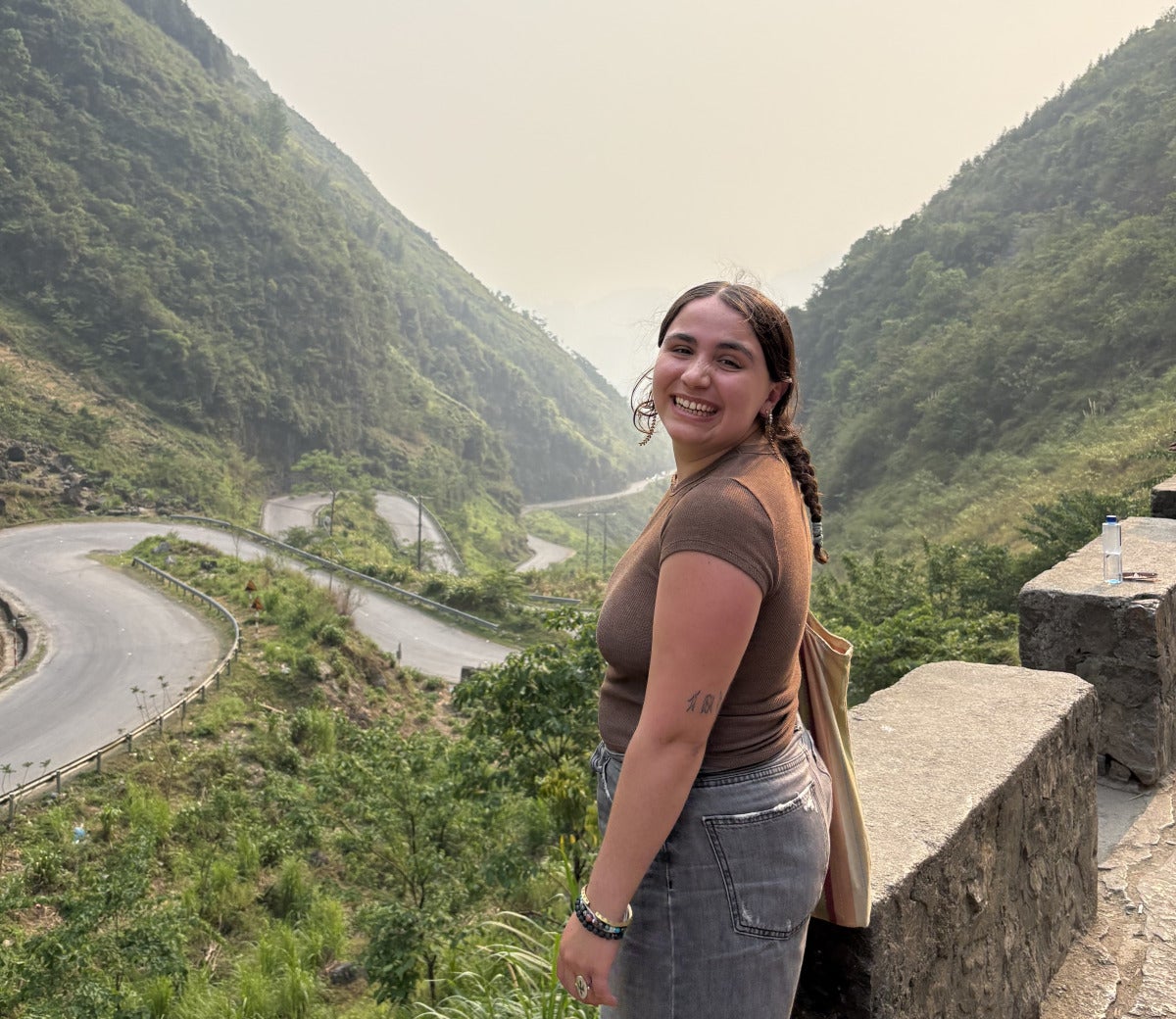
Michela Schenk was studying abroad in Thailand when she got the exciting news from halfway around the world: She had been selected as one of just 65 students nationwide to receive a prestigious scholarship from the Udall Foundation.
The environmental science and history major says the honor came as a happy surprise. Encouraged by DU’s Office of Scholar Development and Fellowship Advising, she had applied to the scholarship following an unsuccessful application for a different award.
“I was still mourning the other application when [the staff at the SDFA] were like, ‘Hey, you should take a look at this,’” she recalls with a smile. After reflecting on her goals and reading about the Foundation’s mission, she felt it couldn’t be a better fit.
The Udall Foundation was established by Congress in 1992 to honor the legacies of Arizona congressmen Morris Udall and Stewart Udall, brothers who both advocated for environmental issues and Native American self-governance. The Udall Undergraduate Scholarship awards up to $7,500 to students who demonstrate a commitment to the environment, tribal policy, or Native healthcare. In addition to receiving the funds, students attend a conference with their cohort in Arizona and gain access to a network of more than 2,000 Udall scholars nationwide.
To be considered for the scholarship, students must first be nominated by their universities. Lindsay Lawton, director of SDFA, says DU has nominated students since 2000, but Schenk is the first to win the award. Her $7,000 scholarship came in the foundation’s most competitive category: students championing environmental stewardship.
“We are delighted that the Udall Foundation has recognized Michela’s leadership potential, academic excellence, and commitment to the environment,” says Lawton. “She is already making an impact on and off campus, and we are excited to see what she will do as DU’s first-ever recipient of this award.”
From curiosity to calling
Schenk credits DU with helping her discover and refine her passions. She arrived on campus planning to be a teacher, one of the few career paths she associated with her love of history. But as a student in the Pioneer Leadership Program (PLP), she was introduced to new ways to make an impact through leadership and community service.
During their second year, PLP students complete a months-long project designed to create positive change in their communities. For her project, Schenk worked with Denver Water to improve outreach to low-income families and communities of color about lead service lines. Although Denver Water has a government-funded program to replace lead pipes, Schenk says years of environmental injustice have left many residents in these communities distrustful of government agencies. She helped develop an ambassador program with local community leaders to inform families of their options.
“That was where I became passionate about water rights and water equity,” says Schenk. “It just blossomed from there.”
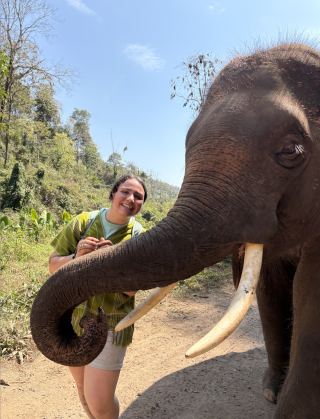
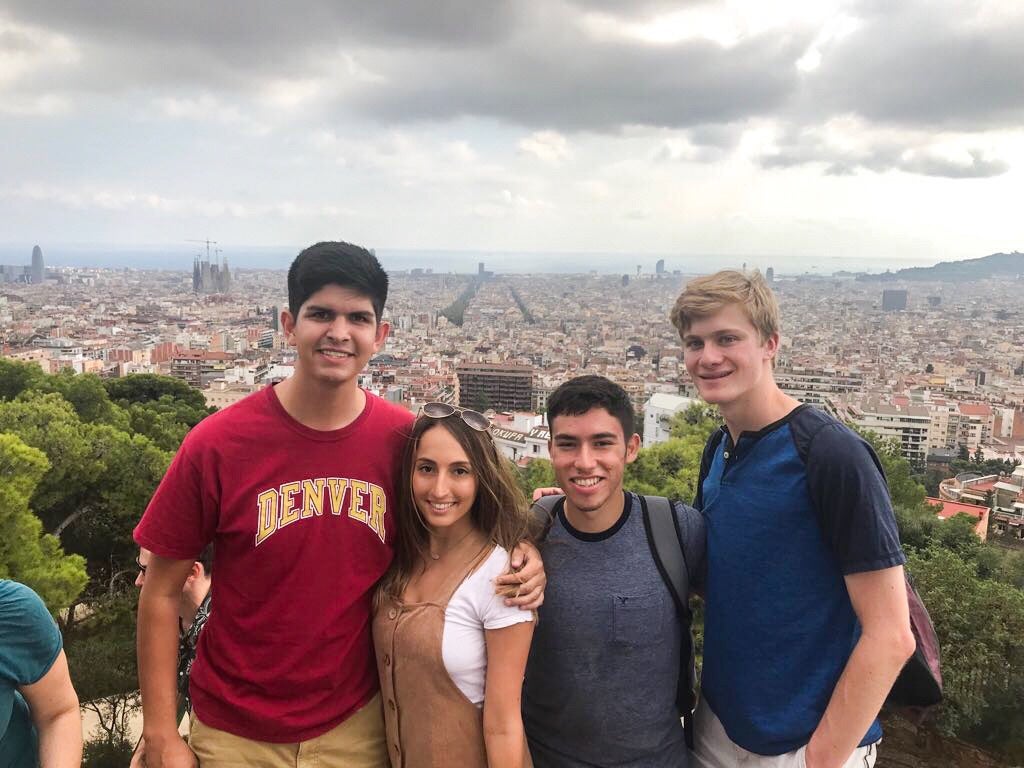
In her third year, Schenk took her studies abroad. She spent the fall quarter in Spain, where her coursework focused on the business of sustainability. Together with her classmates, Schenk drafted a business proposal designed to be profitable while also raising money for water infrastructure in drought-prone countries like Sudan. In December, she got to attend the Nobel Week Dialogue, an annual science conference in Stockholm, Sweden, before embarking on a winter interterm trip to Tanzania. She then spent the spring quarter researching sustainable development and water management in Thailand.
“Thailand has intense wet and dry seasons, and it was interesting to see how the use of water is really only regulated by a kind of social harmony—this trust that your neighbor is not going to take more than they need,” Schenk says. Seeing how other countries approach environmental challenges broadened her perspective on how policy can make a positive impact. “I think it helped me build more hope in our own government system and the way it can interact with people.”
She has already begun putting those lessons into practice. After returning to Denver this summer, Schenk started an internship with the Institute for Science and Policy and the Colorado General Assembly. Working with Rep. Sean Camacho and Senate Minority Leader Cleave Simpson, she is drafting a proposal that she will present to lawmakers in August: a 15-year framework to reduce waste in Colorado inspired by a method she observed while in Sweden. There, food waste is diverted from landfills and converted into fertilizer or biogas, a renewable energy source that can be used in power plants in place of fossil fuels.
As she looks forward to her last year as an undergrad at DU, Schenk sees how each step along the way has led her to new opportunities. She looks forward to seeing where the scholarship takes her next.
“I've learned about so many different careers that I didn't even know were a possibility, and I’ve seen so many creative and innovative solutions to problems around the world that we have here, too,” says Schenk.
After graduation, Schenk hopes to pursue a graduate degree and eventually build a career in water rights and policy. Before then, she wants to gain more hands-on experience working on environmental challenges in communities that need it most.
“I want to get into the [weeds] of water and environmental management,” she says. “[Working for] organizations developing water infrastructure for the Navajo Nation, for example, or Appalachia—that’s where I see my first career steps.”
Students interested in competing for the Udall Scholarship or other nationally or internationally competitive awards can get support from the SDFA.