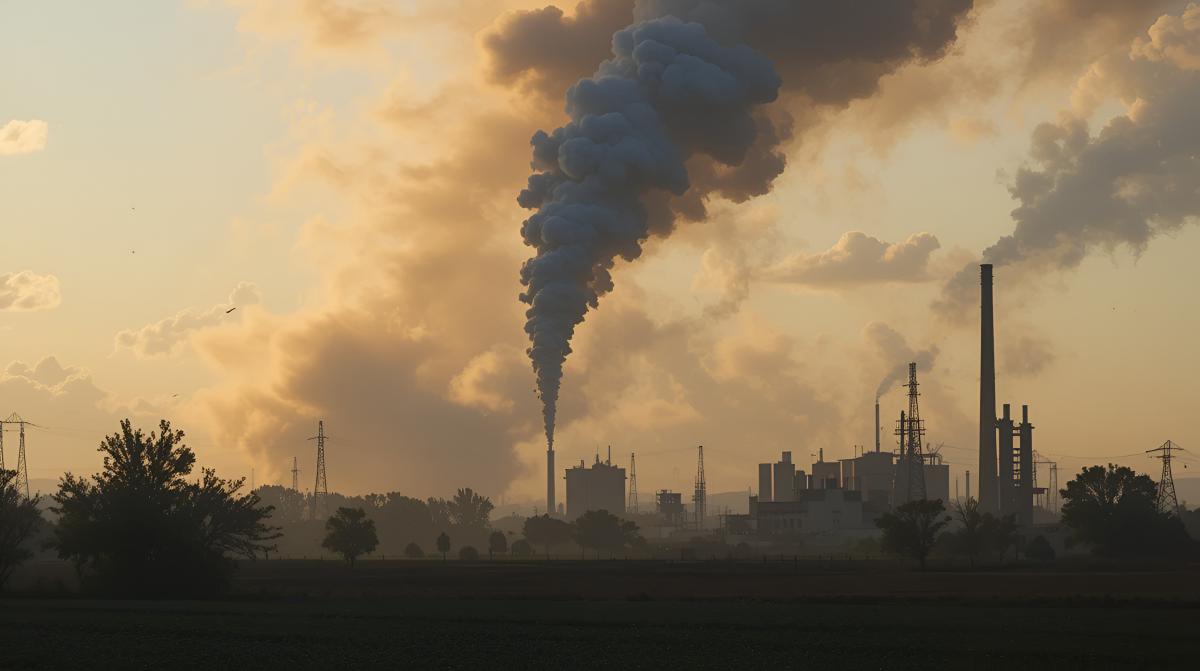
Set against the picturesque Rocky Mountains is a city-like maze of metal and fire, where towering flare stacks glow against the dark. A deep industrial hum drifts through the night, lulling nearby residents to sleep as its presence gnaws at their health. For the people of Commerce City, some of whom have lived next to the Suncor oil refinery for decades, the struggle for clean air and water has become an intergenerational reality.
From asthma and nosebleeds to cancer and cognitive disorders, the community feels the refinery’s impact in their bones. Even after generations of stories of mounting health problems, the community needed data to show the toll of living nearby.
Mobilized by impacted community members, Cultivando assembled an interdisciplinary team of air-monitoring experts and social scientists to gather data. Cultivando is an Indigenous women-led nonprofit that promotes health equity and environmental justice for Latine and Indigenous migrant communities in Adams County. Executive Director Olga Gonzalez invited Ramona Beltrán, an associate professor in DU’s Graduate School of Social Work, to co-lead the social science component. Beltrán serves as a co-investigator alongside Stephanie Malin, a sociology professor at Colorado State University. Together, they turned lived stories into documented power.
The Commerce City site has been home to refineries of various ownerships since 1931, with Suncor acquiring two adjacent facilities in 2003 and 2005. In 2019, an incident made an indelible mark in the skies—and on the community. On a sunny December day, a bright yellow clay billowed into the atmosphere, raining down on parts of the city. Gonzalez remembers it like it was yesterday.
“We were told to not go outside,” Gonzalez says. “The moms were not sure what was happening. That’s how we learned that there was a problem in the community.”
The community outcry could not be ignored. Their concerns and pursuit of the truth, combined with Gonzalez’ firsthand experience, sparked the collaboration with researchers to document and address the health impacts on children in the community. Beltrán, along with colleagues from Colorado State University and Syracuse University, published their findings in a paper last spring titled, “The Kids Ask ‘Are We Safe?’: Oil Refining’s Unjust Environmental Health Impacts on Children.”
They conducted in-depth interviews with 53 participants, all aged 18 or older, who either lived or worked within a three-mile radius of the facility or were community leaders, activists, and teachers who worked in the affected community.
Children’s health was named a top concern, appearing in 93% of the interviews, followed by environmental justice (90%), air quality issues (85%), and the normalization of conditions and experiences (82%).
For teachers who work in the community every day, they see the refinery’s effects in the classroom. One teacher noted that 80% of her students need constant access to an inhaler. Another noted the higher rates of fatal health issues like cancer. And when large-scale pollution incidents occur, teachers are often asked questions they don’t know how to answer.
“Are we safe?” the kids ask.
“I don’t know,” the teachers respond.
“They’re looking to you like you’re a hero who will protect them. I can’t. That’s bigger than me. If it’s coming from the sky, I can’t do anything about it,” one teacher remarked.
In addition to their physical health, these events impact children’s mental well-being, including stress levels, anxiety, and emotional resilience. Older students, in particular, are aware of how their race, socioeconomic status, and zip code unequally expose them to environmental risks—a systemic problem permeating their families for generations.
“For me, it’s a responsibility to make legible and empirically validate what people have been describing for decades,” Beltrán says. “When it’s documented, it’s data. The more data we can put together, the more we can support these communities.”
Over 90% of parents reported various health problems among their children. Many of them feel powerless trying to navigate their children’s illnesses—and when confronted with the prevalence of sickness, they felt a mix of emotions.
“Oh, my kids weren’t lying to me. They weren’t faking it,” one parent recalled.
“I feel really guilty. My kids are sick—and I’m too poor to move,” said another.
The paper’s findings highlight how children are disproportionately affected within the community. Living near the refinery not only impacts their physical and mental health but also disrupts their schooling, which leads to an increase in absenteeism and can contribute to lower academic performance. It’s a domino effect, with the refinery triggering the chain reaction that ultimately leads to poorer outcomes.
For the Commerce City community, this report is only the beginning, laying the groundwork for reclaiming control of the narrative. Beltrán, Gonzalez, and community leaders are urging those in power to act before it’s too late. They’d like to see widespread changes, but at the very least, they’d like to see an updated permitting process.
“Currently, it’s to what extent can you legally pollute,” Gonzalez says. “That doesn’t benefit the community. It doesn’t change the conditions. I’d like to see a permitting process that considers the impact on the environment and people’s health. I’d also like to see reparations in the community.”
Gonzalez’s call for stronger regulations and reparations underscores a broader message: Protecting public health requires awareness and collective action. Understanding the real impacts of pollution is not just the responsibility of those living near it—it’s a responsibility we all share.
“Air pollution knows no boundaries. This is not a ‘them’ problem. This is an ‘us’ problem,” Beltrán says. “It’s easy for folks to forget the interconnectedness of the environment, ecosystems, and people. We’re all impacted by this, very differently, but it absolutely affects the health of everyone.”