






DU Faculty Earn Record Number of Fulbright Awards
From teaching in Botswana to conducting research in Taiwan, five faculty members will soon take their expertise around the world as Fulbright U.S. Scholars, pursuing projects across six countries on five continents.
Five University of Denver faculty members have been awarded prestigious Fulbright U.S. Scholar Program grants for the 2026-27 academic year—the highest number of Fulbright scholar awards in the University's history.
The scholars will travel to six countries across five continents to pursue teaching and research opportunities in disciplines including early childhood development, comparative religion, healthy aging, hospitality, and partnerships between industry and academia. Representing five DU schools and colleges, their work reflects both the breadth of the University's expertise and its growing international impact.
For Leasa Weimer, director of global partnerships in DU's Office of Internationalization and the University's Fulbright liaison, the record number of awards is especially meaningful because of what it took to achieve them.
“The application process is long and incredibly rigorous,” says Weimer. “I'm so excited and proud of these faculty members—they showed up, stayed committed to the process, and persevered. I think that says a lot about them.”
Weimer credits part of this year's success to the supportive Fulbright community the Office of Internationalization has built, in which applicants attend workshops, receive peer feedback throughout the process, and get guidance from DU Fulbright alumni who share their experiences and tips.
Beyond prestige and recognition, Weimer says Fulbright's greatest value lies in the exchange of ideas.
“The Fulbright U.S. Scholar Program fosters academic and cultural exchange that creates lasting impact,” she says. “Scholars bring back ideas and innovations from other countries while sharing what we're doing here in the U.S. It creates this back-and-forth around research, best practices, and new ideas that can shape how we approach challenges in our own communities.”
Read on to learn about this year’s Fulbright scholars.
Rashida Banerjee, Morgridge College of Education
Taichung, Taiwan
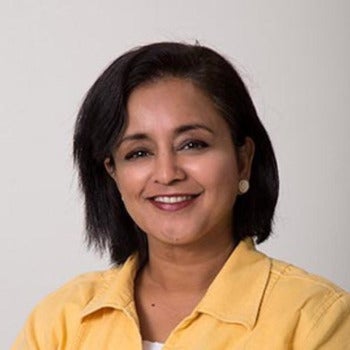
Professor Banerjee, an expert in early childhood development and special education, will spend 10 months collaborating with colleagues at the
National Taichung University of Education on research aimed at strengthening inclusive early childhood education and early intervention for young children with disabilities. By focusing on culturally appropriate family support, assessment practices, and teacher preparation programs, the collaboration will help inform how future educators in both Taiwan and the U.S. are prepared to serve diverse families.
“We're trying to find out what practices truly work with families in a culturally appropriate way rather than simply applying approaches developed elsewhere,” says Banerjee. “Then we can bring what we learn back to our classrooms and better prepare teachers to support Mandarin-speaking, Southeast Asian, and other immigrant families here.”
Barbekka Hurtt, College of Natural Sciences and Mathematics
Piracicaba, Brazil, and Dunedin, New Zealand
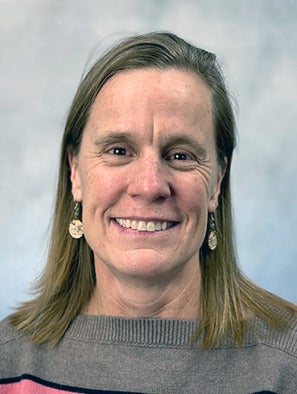
Hurtt, a teaching professor in biological sciences, will travel from one side of the world to the other in the coming academic year, to collaborate with colleagues at the Universidade Estadual de Campinas in Brazil and the University of Otago in New Zealand on global approaches to healthy aging. Hurtt will work with undergraduate and graduate students to explore the physiology of aging across body systems, the role of physical activity in healthy aging, and how sociocultural factors affect healthy aging outcomes across different communities.
“There’s a common perception that aging is bad—that it means less capable or less able. But what we see in real life, and what research increasingly supports, is that people who are older still have such capacity and capability to be fit, active, and engaged,” says Hurtt. “We can do a lot more to help emerging health professionals understand aging from a scientific perspective and learn how to better support patients and clients to improve their health and well-being across the lifespan.”
Haragopal “HG” Parsa, Fritz Knoebel School of Hospitality Management, Daniels College of Business
Vrnjačka Banja, Serbia
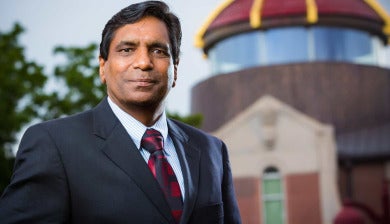
Professor Parsa is preparing for his second Fulbright, two decades after helping universities in India strengthen their graduate hospitality education. In Serbia, he will work with faculty and students at the University of Kragujevac’s Faculty of Hotel Management and Tourism to support graduate programs, mentor researchers, and strengthen academic publishing in the hospitality space. His project will also explore sustainability and regional economic development, including the planning of an international expo and the potential for a regional food and wine festival. Parsa hopes to return to DU with new international examples of such events, develop joint research, and build a lasting relationship with Serbian faculty and students.
“My objective is to help [faculty and graduate students] as much as I can for four months and build relationships so I can go back and help them in the future,” says Parsa. “Being part of the planning process for an expo involving 108 countries is an experience I couldn’t get as a tourist. I can bring what I learn about sustainability, planning, and international business back into my classroom.”
Sarah Pessin, College of Arts, Humanities, and Social Sciences
Sydney, Australia
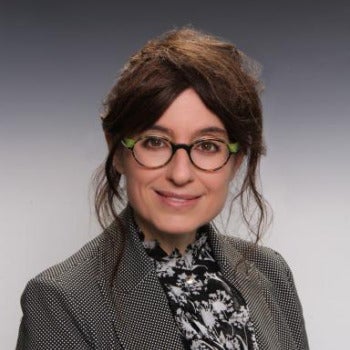
Sarah Pessin, a professor of philosophy and Judaic studies, will collaborate with the Centre for the History of Philosophy at the University of Notre Dame Australia in Sydney. Her project explores Jewish and Christian philosophical perspectives on the biblical creation account and what those perspectives teach communities about ethical care for others. Additionally, Pessin's project was selected for its focus on interfaith initiatives with Sydney communities connected to her research on a civic idea she calls "hard hope," a new way of imagining what it means to look out for neighbors.
Pessin says of her Fulbright opportunity, “It was an honor to be recognized for my love of philosophy and my commitment to interfaith bridge-building, especially in the aftermath of [the mass shooting targeting Sydney's Jewish population at] Bondi Beach.”
Cristin Cornell Tarr, Daniels College of Business
Gaborone, Botswana
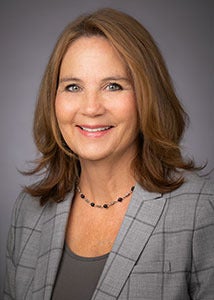
As an Executive MBA student in the Daniels College of Business, Cornell Tarr traveled to South Africa and Mozambique several years ago to study business practices—and enjoyed the experience so much that she vowed to return to the continent one day. Now, as a Daniels teaching assistant professor, she is collaborating with Botswana Accountancy College to co-develop curriculum, support faculty development, and explore innovative approaches to teaching and learning that align with Botswana’s business development goals, including the expansion of tourism. The experience will also inform her classes at DU and create opportunities for students to engage with Botswanan businesses on projects.
“Experiential learning is the basis of so many activities I do within the classroom,” Tarr says. “Students aren’t prepared without it. The more we can create a learning experience that mirrors what they’re going to have in the professional world, the more capable they’re going to be as professionals. Having some of that experience while they’re students is critical.”